
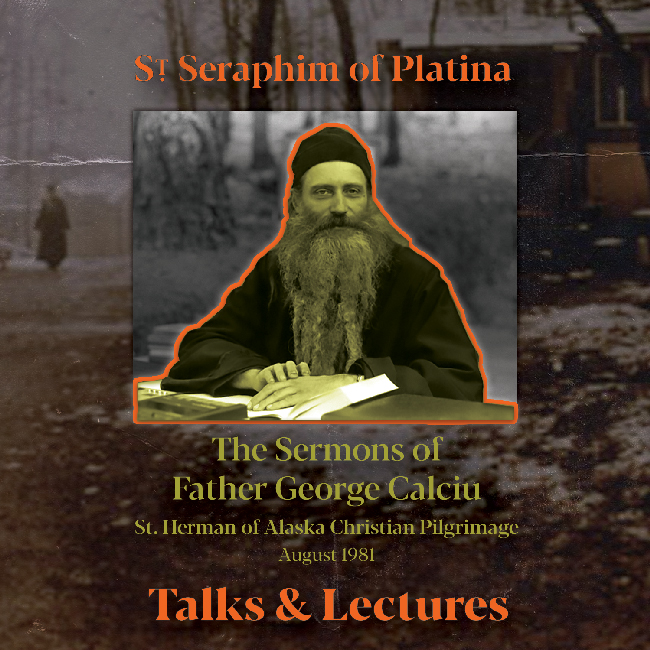
Sermons to young people by Father George Calciu-Dumitreasa.
Given at the Chapel of the Romanian Orthodox Church Seminary, Bucharest
SEVENTH MEDITATION
April 19, 1978
Wherefore I say unto thee. Her sins, which are many, are forgotten; for she loved much: but to whom little is forgiven, the same loveth little [1].
Luke 7 47
When I began this series of addresses, young friend, I did not know you. I knew that you existed, that you aspire after something which the world cannot give you, and I called to you as to my unknown brother to show you a new road to keep.

I told you of Christ and His Church, of heaven and a new earth, of death and resurrection, and above all, of the love of Jesus for you. I speak to you as a brother, not in the way I would speak to my own kin; nor do I love you with an abstract love which seeks after its object, but with a love which has found its object. For I know you and you are in my heart, as I am also in your heart. For if you have been coming here regularly to listen to me, you have done so because you have heard the voice of Jesus, that irresistible voice which has awakened you from your materialist stupor and from the atheist lethargy into which you had sunk. You heard the voice of Jesus say to you: “Come to Me!” and when you turned to Him He put His ring upon your finger and new shoes upon your feet and the best clothes around your shoulders [2].
Because you came wounded and bleeding. You were oppressed by all that you had learnt about the deification of matter and by the prohibitions, raised by the fetishes of atheism, against your inner searchings. Before your eyes, blind up to that point, there shone a light more enchanting than any song of Sirena. You left behind you the ravenous land of unbelief and “husks” which you had eaten up until then [3]. You forgot your teachers who said that this is the only food, without which you would die. And you heard the word of Jesus saying to you: Man shall not lire by bread alone, but by every word that proceedeth out of the mouth of God [4].
Friend, when did you come to feed on the word of God? And yet this is what you are doing. To obtain this Word you have renounced your rest, your comfortable peace; you have overcome obstacles and prohibitions and you have come to eat on the Word of Christ. Honor to you, my friend!
God will give His Word and His grace will be poured upon you in full. For it is written: Everyone that asketh receiveth, and he that seeketh findeth, and to him that knoeketh it shall be opened [5].
For your persistent asking, my courageous friend, Jesus will reward you. Because you have the courage to fight custom and the inertia with which they made you their prisoner; because you had the courage to break the barriers of prohibition raised against you—an uncrossable threshold—by the materialist ideology which believes that authoritarian demands do not need proof and that authoritarianism supplants faith; and finally because you had the courage to go forward, once released from the slavery to their doctrines, towards that which looms before you like a tangible resurrection.
And the further you advance, the better you understand that this infinite, crucified love shines for you, unique and unrepeatable man, as I called you elsewhere.
For your courage, you have received forgiveness. Do you not feel somehow in this spirit of quietness which has now been placed within you, an assurance with which you can keep on the road of obedience to Christ? It is the Grace of God which comes to you. At first this Grace visits you softly, but when as you pray you feel a fiery moment of unknown, ineffable joy sweep through your heart, and when on your knees, you feel an inexplicable affection in your soul and an imperative need to weep, know then that the Grace of Christ has visited you. Persevere, my friend, and Grace will come more and more often until it lives in you permanently. You will then experience a continuous state of Grace and the inner peace whose source is the forgiveness of Christ will revive spiritual joy which will radiate through every pore of your being. You will know the happiness of forgiveness and of forgiving.
Our life is hard when we say the earth and the heavens are mere matter, and our spirits are blind when atheism is our religion. But if, nevertheless, there exists something that can save you, my friend, before your soul is flooded with the light of faith, then it is the joy of forgiving and of being forgiven. Life in common is hard. You must know how to forgive. Not only to forgive—which can bring you the vain satisfaction of Pharisaical goodness, but to know that you can be forgiven, which produces in one an utter humility.
I remember that I spoke to you about Jesus and His Church as a holy Institution, a spiritual reality whose threshold you found long ago. But you have hardly now succeeded in breaking the iron cords of certain concepts which have dragged you back. I spoke to you of churches scattered throughout this land of ours on which we walk with joyful or sorrowing feet. I have also showed you that we have resisted down the ages through our humility and glory, through our unique, Orthodox faith, which has united us with our ancestors and descendents in an indestructible relationship. That love and unity of blood and tongue have been expressed in our real history by the erecting of churches by princes and chiefs as living letters of stone which time can never wash away. Yes, even now if we see a church demolished to make room for a beerhall, we say: “Never” with all our agonizing soul in opposition to those who believe that in destroying churches and forbidding the Word of God in schools, the press and even men’s hearts, they have abolished the One by Whose mercy we live and survive.
I spoke to you about your freedom in Christ and how you should use it. I showed you that minerals do not know death nor life except in analogies—but only have one state of being; that animals have knowledge of life and death; but that you, my friend, know both life and death and above all, resurrection—even though it is forbidden for you to know this. For Christ has called you to deification. Not to the simple condition of survival, not to your present state as man; but He has risen above your human condition when He said: Father, I will that they also, whom Thou hast given Me, be with Me where I am [6].
These are the things that I have said to you, my young friend, and many similar things—all from the words of Christ. And for this my brethren hate me and have forbidden you to hear me—you who are thirsty for the Word of God and who want to know if you are totally condemned or if you have been chosen for a more exalted destiny, for resurrection. They closed the gates on you and they built barricades of prohibitions against you. To you who wrote in one of your letters (for each letter I have received I have taken as coming from you all), that you search for that which transcends matter and the deified immanent of today, your whole hope is to find the road of truth and the complete joy of being awakened by the One Who is the Truth, the Way and the Life. You wrote to me several days ago: “What joy to hear talks about God and about a world other than that of matter from a secular professor in a secular faculty the other day! It was like an unbelievable dream. And to understand that this layman was enlightened by a spirit of faith which was clear not only by his words but also by his whole being. Thus I almost envy you theologians that you know and live that which we do not know and yet towards which our whole being aspires.”
Or you, young professor of 33 years of age, who said: “My years in teaching I have spent in driving students from church with a stick. But now I have understood what led them there and why they returned to the church, forgiving me. I understand that if you, pupils in the first class in Seminary, believe so strongly and know so much about the deep things of the human soul, and about a world which I have forbidden to my students, then I ought to believe more than you.”
Do these words not remind you of Paul on the road to Damascus? For if we admit with Albert Camus that every man passes only once over the Mount of Olives, so we ought to admit that every one of us has experienced the road to Damascus also—when the voice of Jesus resounded out to us: Saul, Saul, why persecutest thou Me? It is hard for thee to kick against the pricks [7].
No man is shielded from suffering. If we suffer, our suffering will be in Christ. If we forgive, we forgive because of Christ. But may truth stand before us always. “Truth before peace” is how one Polytechnic student put it as he listened to these seven addresses. And we understand by peace, not the peace of Christ of John 14:27 [8], nor the peace between the two world wars as defined by Titulescu, but that spiritual, material accomodation for which we trample under foot our principles and justice; that state of tolerance which helps us go to bed at night with a compromise in our heart, only to wake up the next morning with a new compromise under the pillow.
And now I will read to you a statement by one of the theological students regarding the “Seven Lenten Meditations,” since several statements have been taken at the Theological Institute under a forced hand and conscience. We know what a written declaration means—what a source of fear and terror it releases, especially when it is not obtained by persuasion, as is sometimes the case. I have chosen one statement from a number of declarations given to me. This one is clearer, not more correct; for all have their own form of correctness.
“I declare that on Wednesday, April 12, at 9:00 pm, I listened to the sixth Lenten address to young people given by Fr. George Calciu-Dumitreasa, in the Radu Voda Church, Bucharest. I had also listened to the third, fourth and fifth addresses, but in other circumstances. I declare that I met on this occasion, as also during his other sermons, a large number of students from the Theological Institute, doctorate students in theology, students from other faculties whom I had never seen before and very many seminarians. The atmosphere in the church was always impressive, and I experienced genuine moments of spiritual exaltation and concentration. In respect to the content of these sermons, I declare that I am in total agreement with the ideas expressed by the Fr. Professor, who did nothing more than elucidate in a realistic way the problems which demand attention, while adhering strictly to the teachings of the Orthodox Church. “Rev. Professor George Calciu was my teacher for a number of years at the Theological Seminary in Bucharest, from where I graduated, and he has contributed in the greatest measure to our formation as pupils into true servants of the Lord Jesus Christ and of the Church of the people.”
Is it necessary to add anything? Except my homage to this student’s courage, and to all of you who, trampling over instincts of survival, have placed truth before peace and have come here. Perhaps I should also add the joy that these declarations—both written and spoken—have brought me along with your presence in church. I should also add my sense of submissiveness to you all, for you are good and you love Jesus more than me, for without being His servants you would not have been predisposed to sacrifice your accommodation to come and express your love for Christ.
Let us pray for all our brethren who love or hate us, those who have done us harm or good, those who have forgiven us or have nor forgiven us. Let us forgive everything to everyone.
I will close, my young friend, this final word to you with a quotation from the passage of St. John Chrysostom which is read on Pascha night in every Orthodox church, for Pascha, the Day of Resurrection, is approaching. Our Joy is approaching.
Then, at Pascha, you will know that Christ is risen and that we will be risen with Him. When I say that you will know, I realize that your heart and soul will discover this certainty of resurrection which has been long within us and by whose virtue we are here.
“If any has worked from the first hour, let him today receive his just reward. If any has arrived at the sixth hour, let him not doubt for he shall not be deprived of anything. If any has delayed until the ninth hour, let him too approach without doubting. If any has tarried even until the eleventh hour, let him also be not afraid for his lateness. The faithful Master accepts the last even as the first; He gives rest to those who arrive at the eleventh hour even as to the one who has worked from the first hour. Therefore, enter ye all into the joy of your Lord; the first as the last. “Christ is risen, and all the angels rejoice; Christ is risen, and life reigns; Christ is risen, and the dead are no longer in the grave.”
I have read these lines to you that you might know them. I have read this word because Passion Week is before us, before which every mouth is dumb. I have read these words that you might find that in the days which follow, we will live in spirit and in flesh the Calvary of Jesus. At the top of Golgotha there awaits us forgiveness and resurrection. I have read these truths to remind you that this Romanian people climb the hill of history’s Golgotha, ceaselessly recreating in spirit the way of Jesus and anticipating in faith this resurrection which you, my friend and brother, will bring as a torch burning in your heart.
EIGHTH MEDITATION [9]
Supplementary message, May 17, 1978
If I do not the works of
My Father, believe Me not.
John 10:37 [10]
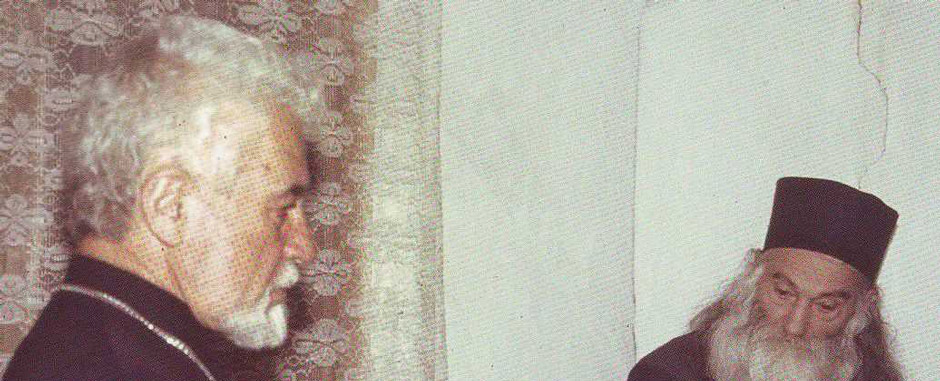
I did not intend to add this supplementary message to the “Seven Addresses to Young People”, given during Lent among the students of theology. But I am forced to come back to you by internal and external pressures. Thus I will appeal in a greater measure to our sense of justice, honor and courage in this address than in my previous ones.
From the moment I decided to attack openly and publicly the problems of religious freedom, from the moment I decided to protest openly about the churches—and I mean to use the plural—I knew what would await me: persecution, terror, the tribunal, blackmail. Within a few monts I have experienced all these, excepting the fact that everything was more inhuman and more degrading than I had imagined. From that moment everything that is bound up with my being, my life and my public activity, became public property. For this reason I will divulge to you a portion of the things that have happened so that you might know what awaits you when your faith, your love of man, determines you to act in the way I have acted. I will not tell you everything, for I do not want you to believe that the face of mankind is hideous. I will tell you only that which justifies this message.
Two reproaches were brought against me—totally contradictory to each other—regarding the “Seven Addresses.” On the one hand I was reproached—and the term is such a euphemism that it in fact becomes almost delicate—that my sermons were supposed to be addressed to seminarians and therefore my accusations of atheism and materialism would fall exclusively upon the teachers of the Seminary. That argument is of such a flagrantly bad intent that it would seem a useless and harmful waste of time to occupy myself in combatting it. On the other hand some theologians reproached me for giving priority to the lay youth and therefore neglecting the young theologians in my sermons. Here I must defend myself.
I have not neglected you, my young friends and brothers. I knew that you were more faithful, more just and more kindhearted than I; that your numerous and assiduous attendance at the sermons which I preached in Radu Voda Church or on the steps there after the school directors closed it against me, has proven that you yourselves were involved in the content of the addresses and that to a great extent your views were being expressed through my mouth. Finally, an inner reason compels me to clarify certain matters concerning us theologians.
It is time, my brothers, for the words of the Saviour that “the time is coming when whoever kills you will believe he is bringing glory to God [11],” to become an actual reality. I do not make such a statement without cause. Rather, I tell you these things because your senior teachers, the very directors of your consciences and the formers of our nation’s future priests, have raised themselves up against the things I preached in the name of Jesus, against my protest at the demolition of the Enea Church and against you theologians who came to listen to truths spoken in courage and forthrightly, in spite of the prohibitions. They rose up, seized by a nobel wrath, to keep you by a tenfold force from coming during the series of Wednesdays to hear the “Seven Addresses.”
They have not kept you from the temptations of the world: from drunkenness, from squabbling, or from any other sin with which the world ensnares you. In that they left you to fend for yourself. But they jumped up to stop you from listening to the word of God spoken in a new way. They were—to use a phrase from the propaganda brochures on class struggle—very vigilant. They made you write declarations against one another, becoming informers through official statements and denouncing all those guilty of the grave crime of listening to my sermons, including yourselves. This was the splendid spiritual action by which they transformed the Theological Institute into an interrogation center. I would like to ask spiritual father Ilie Moldovan, who carried out this interrogation, if he ever took such declarations from his workmates when he was an engineer? If so, it would mean that there is a continuation of activity and that in fact it is not for theology that he is found there. If not, however, I would ask him to explain where and when he learned this system of interrogation?
He who uses the moral conscience-salve that he has his children to bring up, or justifies his action by saying that the Rector told him to take statements, has a remote-control machine inside him instead of a soul. Let us remind ourselves of the words of the Saviour from Matthew 10:37 [12] which constitute our text today.
I know the fury with which his reverence fights against the Lord’s Army—an Orthodox group of popular Christian piety who dared to put pious verse to popular melodies and non-traditional rhythms [13]. It would be good to understand one thing which is clear to a believing man, namely that to the extent to which false science secularizes the world, sometimes even helped by priests, to that same extent a simple faith can stretch into every area of human demonstration.
We know, however, that as risky as it is to combat official and unofficial atheism, it is equally convenient and advantageous to attack the Lord’s Army when they are obliged to hold meetings in semi-obscurity which at times are brutally broken up by the police. In fact there is one answer to the problem of the Lord’s Army. Put all its members into a single congregation under the roof of the Orthodox Church, for they are pious and devout men who want to be received into the fold. Only in this way would you solve a spiritual problem. Not with violence. In spiritual matters violence only complicates things, it solves nothing. I speak of these simple men, honorable in their faith, and who ought to be brought back into the church, because they are men who burn with faith and who defend their religious belief with zeal, which is something not everyone has or wants to do.
Where was the parish priest of the Enea Church on the previously arranged night that the demolitioners came? Where were the priests of Focsani when the Party Secretary of the Region, Mr. Dobrovici (as Romanian by his name as by his actions!) destroyed this church? Would this gentleman have dared to throw the church into the air together with its servants? Be assured not! On the contrary; some of the truckdrivers and bulldozer workers showed more dignity and courage in refusing to participate in the destruction of the church. I have since learnt that for this reason four of them had their work contracts demonstratively broken. What reward was given to those who destroyed these churches and what sanctions were imposed on the priests who deserted their obligations?
The time will come, and it is not far off, when we shall know the complete list of those who signed in favor of the demolition of the Enea Church. They will be covered in shame. The time will come when we shall know the complete list of those who refused to sign, rightly considering this act of destruction a barbarous, anti-cultural act. They will be honored for their Romanian soul. All I can say now is that those who refused to sign are the most outstanding representatives of our contemporary culture, history, literature and art. Their names pronounced in public will strengthen further in us the respect which we bear towards them and will prove that only he who is a barbarian in thought could destroy the religious past of our nation to replace it with the crippled puppet of atheism. These men have heard the words of the Saviour, even if they did not know how to decipher them with an inner sense of dignity and honor: What shall a man give in exchange for his soul? [14].
During the last few months I have received several intimidating phone calls from people who hide their terrorist inclinations and instincts for moral torture behind the mask of an anonymous telephone call. A whole range of threats have been made against me and my family, ranging from calls for our moral destruction to calls for our civic and physical destruction. To the degree that it becomes necessary I will make known these things publicly, so that you may all see what honor and humanitarianism these individuals possess. Some of these men set themselves up as defenders of the regime, which it seems would be threatened by my sermons (but I don’t know how). Can there be any falsehood greater than this? What is strange is that these “defenders” strive to convince us that the regime which they defend is one ready to perpetrate any abuse and ready to destroy me though innocent, and my family also, for the guilt of which I have none. These things are happening during a time when I believe our regime acknowledges certain humanitarian principles which do not endorse such abuse.
I have said all this to you in passing. For I want to make these things public and cause this blackmail and moral gangsterism to cease. It draws out of me my soul’s right to revenge my threatened family. I hope that in making them public these actions will be condemned and our human dignity will be increased according to the words of Jesus: What I tell you in darkness, that speak ye in the light; and what ye hear in the ear, that preach ye upon the housetops [15].
For my voice is not sufficient, and it must be multiplied by hundreds of your voices, that the truth of the faith and of mankind might reach the ears of all. We remain tightly united around the hierarchy of the Church and our bishops, for without the hierarchy, the Church would be an organism without a strong skeleton. We continue in relation to them as subjects and we say to them that they are the leaders of at least fourteen million Romanian believers, and that among them are to be found the finest men who know how to unite love for one’s country with the universality of Christian love, and how to unite faith with true culture.
Should they possess the awareness and should they truly be Christ’s apostles on Romanian soil, then we will be their fine disciples. If one single bishop had been on our side, we would not have helped in the destruction of the Enea church, or at the worst, we would be seeing its reconstruction today. Nor would we have painfully assisted in the pulling down of the Lord’s church at Focsani. We humbly plead with our bishops not to allow a profane beerhall to replace the Enea church, a beerhall where drunkenness, violence and prostitution will take place. Defend this sacred ground on which our princes walked, and may it be rebuilt whatever the cost. This is the duty of every Romanian Christian among us.
We will not cease to protest against this sacrilege and this illegality. We will never draw back from opposing any similar abuse of anti-cultural acts, such as those committed at Focsani and Bucharest. We will make these transgressions public also. It is our right to obstruct their occurrence.
And who can stop us, if Christ is with us? For what price has our life outside of Jesus, once we recognize that Whosoever will save his life shall lose it; but whosoever shall lose his life for My sake and the Gospel’s, the same shall save it [16]; or, Ye are the salt of the earth… the light of the world [17].
Each year thousands of graduates finish the faculties of medicine, engineering, law, teaching, etc. They become lost in the anonymity of the masses and of their professions. But if, in a single year, we were to see one thousand priests graduate, full of the spirit of sacrifice, priests as Christ would have them to be, then in less than one year the spiritual face of our country would be changed like that of Jesus on Mount Tabor. For such priests sanctify the world and bring a new spirit of truth and justice, a heavenly love and Christocentric comfort to a world of suffering.
Our people are a ripe harvest, waiting to be gathered in for Christ: Lift up your eyes, and look on the fields; for they are white already to harvest [18]. But where are such worthy harvesters? Lift us your eyes and I tell you, you will see how few there really are. And the wheat is wasting in the field outside of the Kingdom of God. Be most conscientious harvesters. Forget your instincts which are overloaded by your teachers whose principles are: “I have a mother, father, sons and daughters, too large a salary to accept the sacrifice and suffering of Christ and His Church.” Lift up the eyes of your spirit to the people who believe in you and for whom there exists no other spiritual salvation than in the Church of Christ.
Be harvesters! Be pastors! And above all, pray to God to give this nation good harvesters who will not love parents and children more than Christ, who seeing the multitude was moved with compassion on them, because they fainted, and were scattered abroad, as sheep having no shepherd. Then saith He unto His disciples, The harvest truly is plenteous, but the laborers are few. Pray ye therefore to the Lord of the harvest, that He will send forth laborers into His harvest [19].
Let us pray to God for the harvest and the reapers!
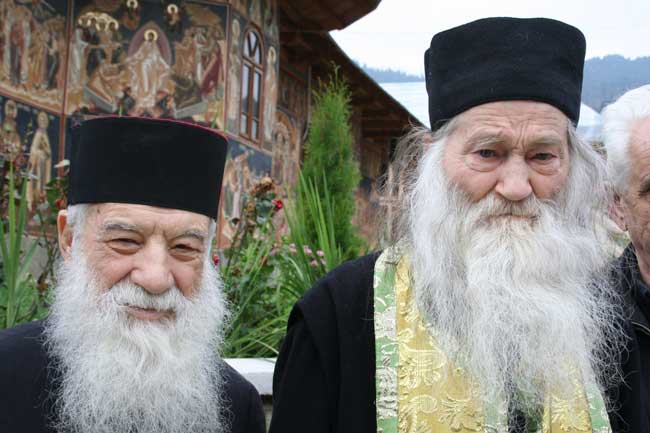
[1] And he turned to the woman, and said unto Simon, Seest thou this woman? I entered into thine house, thou gavest me no water for my feet: but she hath washed my feet with tears, and wiped them with the hairs of her head. Thou gavest me no kiss: but this woman since the time I came in hath not ceased to kiss my feet. My head with oil thou didst not anoint: but this woman hath anointed my feet with ointment. Wherefore I say unto thee, Her sins, which are many, are forgiven; for she loved much: but to whom little is forgiven, the same loveth little. And he said unto her, Thy sins are forgiven. And they that sat at meat with him began to say within themselves, Who is this that forgiveth sins also? And he said to the woman, Thy faith hath saved thee; go in peace. Luke 7 44–50
[2] And he arose, and came to his father. But when he was yet a great way off, his father saw him, and had compassion, and ran, and fell on his neck, and kissed him. And the son said unto him, Father, I have sinned against heaven, and in thy sight, and am no more worthy to be called thy son. But the father said to his servants, Bring forth the best robe, and put it on him; and put a ring on his hand, and shoes on his feet: And bring hither the fatted calf, and kill it; and let us eat, and be merry: For this my son was dead, and is alive again; he was lost, and is found. And they began to be merry. Luke 15 20-24
[3] And he said, A certain man had two sons: And the younger of them said to his father, Father, give me the portion of goods that falleth to me. And he divided unto them his living. And not many days after the younger son gathered all together, and took his journey into a far country, and there wasted his substance with riotous living. And when he had spent all, there arose a mighty famine in that land; and he began to be in want. And he went and joined himself to a citizen of that country; and he sent him into his fields to feed swine. And he would fain have filled his belly with the husks that the swine did eat: and no man gave unto him. Luke 15 11-16
[4] Then was Jesus led up of the Spirit into the wilderness to be tempted of the devil. And when he had fasted forty days and forty nights, he was afterward an hungred. And when the tempter came to him, he said, If thou be the Son of God, command that these stones be made bread. But he answered and said, It is written, Man shall not live by bread alone, but by every word that proceedeth out of the mouth of God. Matthew 4 1-4
[5] Ask, and it shall be given you; seek, and ye shall find; knock, and it shall be opened unto you: For every one that asketh receiveth; and he that seeketh findeth; and to him that knocketh it shall be opened. Or what man is there of you, whom if his son ask bread, will he give him a stone? Or if he ask a fish, will he give him a serpent? If ye then, being evil, know how to give good gifts unto your children, how much more shall your Father which is in heaven give good things to them that ask him? Matthew 7 7-11
[6] And the glory which thou gavest me I have given them; that they may be one, even as we are one: I in them, and thou in me, that they may be made perfect in one; and that the world may know that thou hast sent me, and hast loved them, as thou hast loved me. Father, I will that they also, whom thou hast given me, be with me where I am; that they may behold my glory, which thou hast given me: for thou lovedst me before the foundation of the world. O righteous Father, the world hath not known thee: but I have known thee, and these have known that thou hast sent me. And I have declared unto them thy name, and will declare it: that the love wherewith thou hast loved me may be in them, and I in them. John 17 22-26
[7] And Saul, yet breathing out threatenings and slaughter against the disciples of the Lord, went unto the high priest, And desired of him letters to Damascus to the synagogues, that if he found any of this way, whether they were men or women, he might bring them bound unto Jerusalem. And as he journeyed, he came near Damascus: and suddenly there shined round about him a light from heaven: And he fell to the earth, and heard a voice saying unto him, Saul, Saul, why persecutest thou me? And he said, Who art thou, Lord? And the Lord said, I am Jesus whom thou persecutest: it is hard for thee to kick against the pricks. And he trembling and astonished said, Lord, what wilt thou have me to do? And the Lord said unto him, Arise, and go into the city, and it shall be told thee what thou must do. Acts 9 1-6
[8] These things have I spoken unto you, being yet present with you. But the Comforter, which is the Holy Ghost, whom the Father will send in my name, he shall teach you all things, and bring all things to your remembrance, whatsoever I have said unto you. Peace I leave with you, my peace I give unto you: not as the world giveth, give I unto you. Let not your heart be troubled, neither let it be afraid. Ye have heard how I said unto you, I go away, and come again unto you. If ye loved me, ye would rejoice, because I said, I go unto the Father: for my Father is greater than I. And now I have told you before it come to pass, that, when it is come to pass, ye might believe. Hereafter I will not talk much with you: for the prince of this world cometh, and hath nothing in me. But that the world may know that I love the Father; and as the Father gave me commandment, even so I do. Arise, let us go hence. John 14 25-31
[9] This sermon was to be preached on May 17, 1978, in Radu Voda Church as part of a new series of sermons announced May 10. The new series was to be on the theme of Christ and Culture. It was, however, not held because I was suspended by order of Bishops Roman lalomiteanu, Ilie Georgescu and Octavian Popescu. Teachers at the Seminary were forced to keep watch until 10 pm that night to prevent me from preaching. Students in the Seminary and Institute were confined to their dormitories.
[10] Then the Jews took up stones again to stone him. Jesus answered them, Many good works have I shewed you from my Father; for which of those works do ye stone me? The Jews answered him, saying, For a good work we stone thee not; but for blasphemy; and because that thou, being a man, makest thyself God. Jesus answered them, Is it not written in your law, I said, Ye are gods? If he called them gods, unto whom the word of God came, and the scripture cannot be broken; Say ye of him, whom the Father hath sanctified, and sent into the world, Thou blasphemest; because I said, I am the Son of God? If I do not the works of my Father, believe me not. But if I do, though ye believe not me, believe the works: that ye may know, and believe, that the Father is in me, and I in him. John 10 31-38
[11] These things have I spoken unto you, that ye should not be offended. They shall put you out of the synagogues: yea, the time cometh, that whosoever killeth you will think that he doeth God service. And these things will they do unto you, because they have not known the Father, nor me. But these things have I told you, that when the time shall come, ye may remember that I told you of them. And these things I said not unto you at the beginning, because I was with you. John 16 1-4
[12] Fear ye not therefore, ye are of more value than many sparrows. Whosoever therefore shall confess me before men, him will I confess also before my Father which is in heaven. But whosoever shall deny me before men, him will I also deny before my Father which is in heaven. Think not that I am come to send peace on earth: I came not to send peace, but a sword. For I am come to set a man at variance against his father, and the daughter against her mother, and the daughter in law against her mother in law. And a man’s foes shall be they of his own household. He that loveth father or mother more than me is not worthy of me: and he that loveth son or daughter more than me is not worthy of me. And he that taketh not his cross, and followeth after me, is not worthy of me. He that findeth his life shall lose it: and he that loseth his life for my sake shall find it. He that receiveth you receiveth me, and he that receiveth me receiveth him that sent me. He that receiveth a prophet in the name of a prophet shall receive a prophet’s reward; and he that receiveth a righteous man in the name of a righteous man shall receive a righteous man’s reward. And whosoever shall give to drink unto one of these little ones a cup of cold water only in the name of a disciple, verily I say unto you, he shall in no wise lose his reward. Matthew 10 31-42
[13] Founded in 1927, the “Lord’s Army” was abolished by the Communist government in 1947 and continues its activities underground. Its emphasis on popular revivalism has caused friction between it and the Orthodox hierarchy.
[14] And when he had called the people unto him with his disciples also, he said unto them, Whosoever will come after me, let him deny himself, and take up his cross, and follow me. For whosoever will save his life shall lose it; but whosoever shall lose his life for my sake and the gospel’s, the same shall save it. For what shall it profit a man, if he shall gain the whole world, and lose his own soul? Or what shall a man give in exchange for his soul? Whosoever therefore shall be ashamed of me and of my words in this adulterous and sinful generation; of him also shall the Son of man be ashamed, when he cometh in the glory of his Father with the holy angels. Mark 8 34-38
[15] And ye shall be hated of all men for my name’s sake: but he that endureth to the end shall be saved. But when they persecute you in this city, flee ye into another: for verily I say unto you, Ye shall not have gone over the cities of Israel, till the Son of man be come. The disciple is not above his master, nor the servant above his lord. It is enough for the disciple that he be as his master, and the servant as his lord. If they have called the master of the house Beelzebub, how much more shall they call them of his household? Fear them not therefore: for there is nothing covered, that shall not be revealed; and hid, that shall not be known. What I tell you in darkness, that speak ye in light: and what ye hear in the ear, that preach ye upon the housetops. And fear not them which kill the body, but are not able to kill the soul: but rather fear him which is able to destroy both soul and body in hell. Matthew 10 22-28
[16] And when he had called the people unto him with his disciples also, he said unto them, Whosoever will come after me, let him deny himself, and take up his cross, and follow me. For whosoever will save his life shall lose it; but whosoever shall lose his life for my sake and the gospel’s, the same shall save it. For what shall it profit a man, if he shall gain the whole world, and lose his own soul? Or what shall a man give in exchange for his soul? Whosoever therefore shall be ashamed of me and of my words in this adulterous and sinful generation; of him also shall the Son of man be ashamed, when he cometh in the glory of his Father with the holy angels.And when he had called the people unto him with his disciples also, he said unto them, Whosoever will come after me, let him deny himself, and take up his cross, and follow me. For whosoever will save his life shall lose it; but whosoever shall lose his life for my sake and the gospel’s, the same shall save it. For what shall it profit a man, if he shall gain the whole world, and lose his own soul? Or what shall a man give in exchange for his soul? Whosoever therefore shall be ashamed of me and of my words in this adulterous and sinful generation; of him also shall the Son of man be ashamed, when he cometh in the glory of his Father with the holy angels. Mark 8 34-38
[17] Ye are the salt of the earth: but if the salt have lost his savour, wherewith shall it be salted? it is thenceforth good for nothing, but to be cast out, and to be trodden under foot of men. Ye are the light of the world. A city that is set on an hill cannot be hid. Neither do men light a candle, and put it under a bushel, but on a candlestick; and it giveth light unto all that are in the house. Let your light so shine before men, that they may see your good works, and glorify your Father which is in heaven. Matthew 5 13-16
[18] Jesus saith unto them, My meat is to do the will of him that sent me, and to finish his work. Say not ye, There are yet four months, and then cometh harvest? behold, I say unto you, Lift up your eyes, and look on the fields; for they are white already to harvest. And he that reapeth receiveth wages, and gathereth fruit unto life eternal: that both he that soweth and he that reapeth may rejoice together. And herein is that saying true, One soweth, and another reapeth. I sent you to reap that whereon ye bestowed no labour: other men laboured, and ye are entered into their labours. John 4 34-38
[19] And Jesus went about all the cities and villages, teaching in their synagogues, and preaching the gospel of the kingdom, and healing every sickness and every disease among the people. But when he saw the multitudes, he was moved with compassion on them, because they fainted, and were scattered abroad, as sheep having no shepherd. Then saith he unto his disciples, The harvest truly is plenteous, but the labourers are few; Pray ye therefore the Lord of the harvest, that he will send forth labourers into his harvest. Matthew 9 35-38
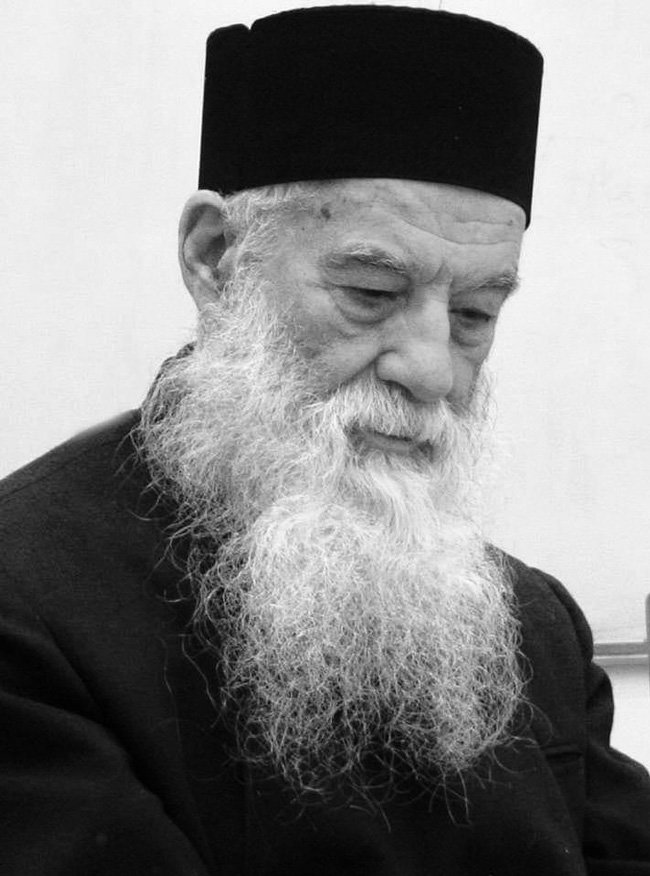
The Orthodox Word, Vol. 18, No. 3 (104), May-June 1982, pp. 124-37

Pas de commentaire