
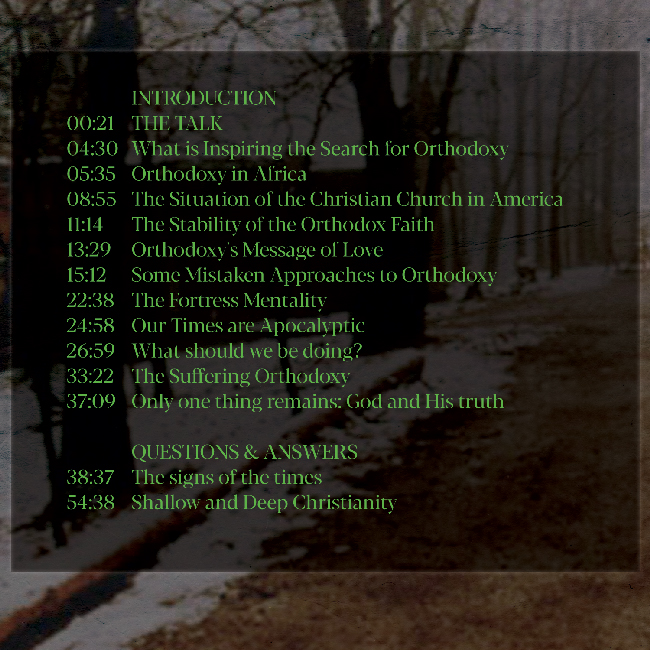
Introduction
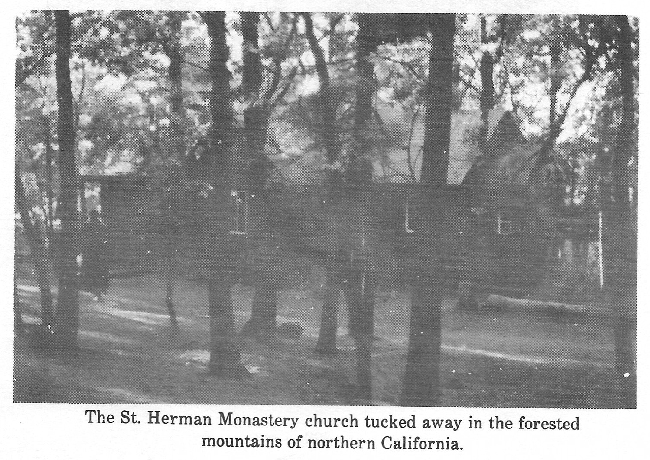
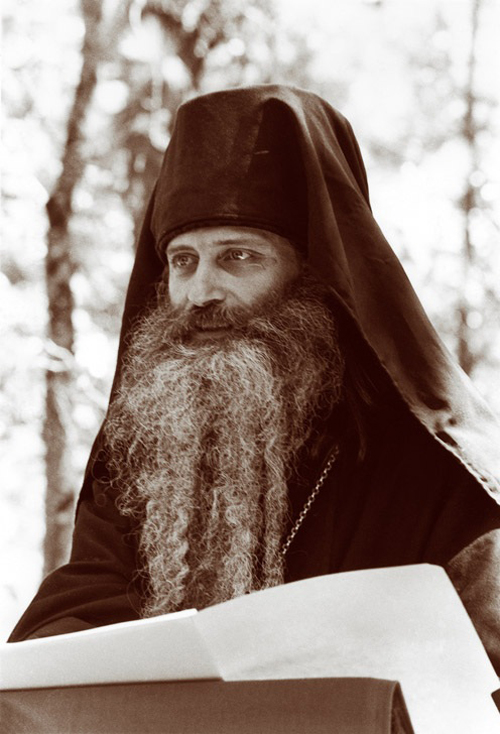
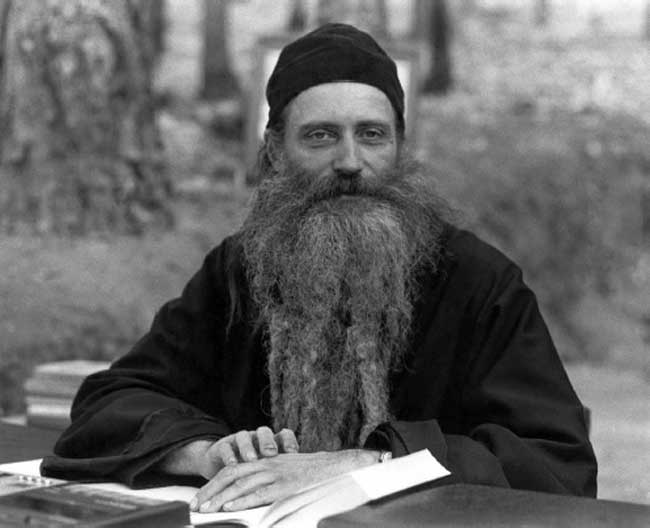
Father Seraphim Rose of the Saint Herman of Alaska Orthodox Christian Monastery in Platina, California.
The lecture is entitled The Search for Orthodoxy Today and was given at the Saint Herman of Alaska Pilgrimage in August of 1981.
The Talk
The title of my talk is The Search for Orthodoxy. I’m very thankful there are so many people who come here today has already proved that there is such a thing as the search for Orthodoxy right at the present time. Those who don’t have it are looking for it. Those who do have it are looking to go deeper into it.
I’d like to give a little like historical background to what is happening now, and then hopefully we can continue some of the discussion we started after Father Alexei’s talk. God is very fruitful for us to be thinking about these, reflecting about these things, how we can be participating in helping people to find out more about Orthodox faith and ourselves to be deeper.
Our times, the second half of the 20th century in general might call a time of spiritual search. Many people are dissatisfied whether it was various forms of Christianity, or non-Christian religions, or with atheism, unbelief and all those currents of despair which are going about in our world now. Many people are hoping against hope that there is more to life, more to spiritual reality than they have found so far. Therefore, these are the ones who are in the process of searching. More and more of these searchers are finding what they’re looking for in the Orthodox Church. Been useful for us to think some moments that the people searching for Orthodoxy are not just here and not just in one or two places, but actually all over the world. First of all, one of the striking places where people are searching for Orthodoxy is in Africa. There are peoples of Uganda, Kenya, Tanzania, and the other mission fields are finding Orthodoxy to be what they call the true old religion against the various sects and cults of modern Africa. Another place where people are searching is Russia. That is a real revival going on, especially among the young people, not only in Russia, also in Romania and other communist countries.
They’re finding an Orthodoxy, fresh air, as opposed to the day of atheism, which they have, and a recontact with their historical past after 60 years of tyranny under the domination of atheists. Another place where people are searching for Orthodoxy is in Greece, where for the first time in this century, in the last three or four years, the number of monks of Mount Athos has been increased because as the numbers of young people among the Greek people who are finding their roots once again in Orthodoxy.
In America, we see it both among the old and the young people weary of the rootless and arbitrary teachings of contemporary Protestantism, are discovering that there is a real and profound Christianity in Orthodoxy. Roman Catholics are finding in the midst of their own disintegrating church structure that Orthodoxy is actually what they once thought they had when they were Roman Catholics.
And young Jews also, especially in the Soviet Union, but also in the free world, are increasingly finding the answer to the spiritual vacuum of today among their people then being converted to Orthodoxy. And there are many other people throughout the world who are coming to the Orthodox faith in these days we could call the latter days.
What did this mean to us? We’re already Orthodox. We who have already found the end of our search in the Orthodox faith must be aware of these searchers. And of what can one can actually call a literal movement toward Orthodoxy that is occurring throughout the world today. It is still comparatively small—some places it’s only a trickle, but it is already becoming one of the signs of our times and something which for us is both inspiring and sobering and can help us to survive as Orthodox Christians in these times. Let us look a little closer at this movement and see what we can learn from it and more importantly, how we can respond to it positively and help.
What is inspiring the search for Orthodoxy
Let us ask the question what is inspiring, motivating this search for Orthodoxy in so many different parts of the world?
The first obvious thing, which especially in the last five or ten years has become quite a subject of discussion, is the search for roots. Our contemporary mankind is so uprooted that this is a psychological reaction which is quite natural. In Russia this search is obvious as bound up with the fact that for 60 years and more the people have been deprived of their historical roots. Therefore, once they begin finally to wake up from this, the natural thought is to go back to what was before 1917, and that means Orthodoxy and in fact some surprising numbers of cases, it means the Tsar, old Russia, holy Russia and so forth.
Something similar is happening on a smaller scale in Greece, where the young people are beginning to reject the modern Westernism, which has poisoned the Greek society for the past century. And they’re finding their roots in the Orthodox past in Greece and especially in this monasticism on Mont Athos and other places.
Orthodoxy in Africa
Then we think about Africa, and here we wonder how can the Africans find their roots in Christianity, because they’re all pagans. Back until 100 years ago, nobody was even preaching any kind of Christianity in Africa. At least it was Africa below the Sahara. As surprising as it may seem to us, Orthodoxy and Christianity in general is growing faster in Africa than anywhere else in the world. And in a matter of some years, Africa will become the leading Christian continent, both in number of believers and even more in the fervor of their faith. America and the US, South America and Europe, the old countries which once thought they were Christian, they are going to be a second place to Africa. The 2nd-century Christian writer Tertullian says that the human soul by nature is Christian, and this is proving true in the eagerness of the people of Africa to accept the Gospel of Christ, which has only been preached, as I said, for these last 100 years or so.
Many people have been attracted so far in Africa to Roman Catholicism and various Protestant sects, but those who are really seeking for the roots of Christianity are finding orthodoxy. Perhaps not all of you know about the story of the two Anglican seminarians in the 1920s. They’re both still alive. One is now a Bishop in Uganda. Another one is a priest, married man. They sought for the true old Christianity. They found that the Anglicanism in their seminary and contemporary England was not the same as the Gospel preached in the first centuries—did not accord with the Ecumenical Councils which they were studying and the whole history of the Church. Therefore they studied Roman Catholicism and discovered that it also began to change 1,000 years ago. And they finally found out about Orthodoxy and this must be the real old Church. And they got all mixed up by some wandering man who called himself Orthodox, but was a sectarian. And they got involved with the patriarch of Alexandria, who was an Ecumenist and told them to go back to the Anglican, don’t bother us.
And their search for Orthodoxy was so deep that all this didn’t bother them. And they finally came and there was finally a patriarch willing to receive them. They came to the Orthodox Church. And today this is a very flourishing mission and especially in Uganda, but now it’s also spreading towards the West, although there’s several missions opened up in Ghana and the West, and Nigeria people are asking about it: what is Orthodox?
These people already in these few years have come quite a remarkable synthesis, you might say. They use the Greek chant. You have even a record on this stand of Bishop of Kampala and it’s a record of singing—it’s a very inspiring singing. It’s a Greek, basically Greek music. Everybody sings and so it puts their heart into it and it sounds like a real heartfelt thing which is going on there. But the people who have been there say it’s extremely dignified, very Orthodox, just like in the old country.
And that’s all, we have the whole issue of The Orthodox Word devoted and see pictures there of their priests and their clergy and their services. Of course, all this occurs in conditions of great poverty. It’s a great luxury to them if they can have a tin roof on their churches. There are very true stone churches, but they’re building a few more now.
The Situation of the Christian Church in America
In America, the same question of the need for roots is obvious, because in America the Protestant sects are divided up into 100 or 1,000 different groups based upon very personalized interpretations of the Scripture. All this points to the need to return to the original undivided Christianity, which is Orthodox. Just in the past few years, more and more Protestants have been finding their way to the church.
There’s even a group organized as the Evangelical Orthodox Church—just come all the way from the Billy Graham class Campus Crusade of the 1950s—like his men were the ones who are now called bishops in this group. Were all workers in this campus crusade in 1950s. They came to see the need for sacraments, for hierarchy, historical continuity with the past. And although they’re still quite far off the fulness of Orthodoxy, they’re traveling in that direction. And they’re only one group among many people who are researching his way.
This movement is still much to say that it’s not just this group who’s calling itself the Evangelical Orthodox Church with a whole group of people and many others, as says quite a bit this it’s a going movement, it’s quite advanced. Therefore there’ll be many more people interested in this and we are the ones who will be able to give them what they need.
In many different places, in many different ways, people today are searching and finding the roots of Christianity in precisely the Orthodox Church.
Things which we as Orthodox take for granted are sometimes astonishing discoveries for them: the splendor of our divine services, coming down from ancient times, so suited to the need of the human soul to worship with God in spirit and in truth. The depth of the spiritual teaching contained in the writings of our Holy Fathers. The continuity with the past of Christianity and our beginnings not to some more or less recent teacher, but to Christ himself and His Apostles. And our bishops and priests receive their ordinations in the direct line, going back to the Apostles.
If we ourselves, having these roots, are leading a conscious Christian life, we can be of tremendous help to those who are weary of personalized interpretations of Christianity, who want with all their heart to get back to the true Christianity of ancient times, which is the Orthodox Church. This is one thing, the search for roots.
The Stability of the Orthodox Faith
Second thing motivating people today and their search for Orthodoxy is what we might call stability. The Orthodox, with the sects of our day in such ferment and new sects coming up every day and even the once uniform Roman Catholic Church has fallen to pieces and searching for his own identity.
In the midst of this kind of religious ferment, the unchangingness of the teaching and practice of the Orthodox during the centuries is a very impressive witness to its Apostolic origin and its uncompromising stand in the truth, not giving in to every new wind of doctrine.
It is true that we Orthodox have a problem with the modernist and ecumenists in our midst, but even with them such a thing as the new morality or situation ethics, so fashionable today would be quite unthinkable.
The jazz masses and other blasphemies perpetrated in the name of making the Church up to date and relevant will be rejected by any Orthodox congregation. When the Living Church movement began in Russia in the 1920s had the full support of the Communist Government, with the aim of adapting the Church to the realities of the times, in a way that we would be considered today rather conservative, it was the people themselves who refused to accept. Back at that time, mid-1,920s, most of the churches in Russia, with the help of the government were living churches. The Orthodox were a minority of churches.
The instinct for preserving what is ancient, dignified, generally respected, what has been handed down in the Church from generation to generation is so strong in Orthodoxy, that to lose it is really the same as losing one’s Orthodoxy. This kind of stability and continuity with the past is unheard of almost every anywhere else in the contemporary world, and it makes Orthodoxy a rock of refuge in our troubled times. And if one realizes that the source of this stability is the unchanging truth which the Church has received and passed on from generation to generation, from the time of Christ and of the prophets to our own days, then it is no wonder that it is attracting souls who are hungry most of all for truth. The truth that comes from God and gives meaning and a point of anchor to all those tossed about in the sea of this life.
This is the second point. First, the search for roots. Second, the stability of the orthodox faith.
Orthodoxy’s Message of Love

But probably the deepest and most attractive thing about Orthodoxy today is its message of love.
The most discouraging thing about today’s world is it has become so cold and hopeless. In the Gospel, our Lord tells us that a leading characteristic of the last times will be that the love of many will grow cold[1]. The Apostle of love, Saint John the Theologian, has said that the chief distinguishing mark of Christians is the fact that they have love one for another[2]. The most influential Orthodox teachers of recent times have been those most filled with love, who attract people to the riches of the Orthodox faith by their own example, overflowing self-sacrifice and love. One can think of Saint John or Kronstadt, St. Nectarios of Pentapolis, Saint Cosmas of Aetolia, two centuries ago, and our own Archbishop John of San Francisco.
By being aware of these qualities, these three things I mentioned, we could mention other things also, that is the search for roots, stability, and the message of love, these things are the chief among the chief things that are attractive to the Orthodoxy today.
Being aware of them will help us to be ourselves better Orthodox Christians, better able to help those who are now coming and searching. But I have to say a word of warning. We have our Orthodox faith, this precious thing we see many people searching for it, some people finding it. But we have to remind ourselves that there is nothing automatic about finding and keeping the Orthodox faith. We can also fall away from it, or we can give such a poor example of it that is barren and fruitless, inspires neither ourselves nor anybody else. And a seeker can find the Orthodox faith and not really enter into its life.
Some Mistaken Approaches to Orthodoxy
Let us therefore look at a few of the mistaken approaches to Orthodoxy which prevent us to being fruitful Orthodox Christians and witnesses to those who are searching. This word is addressed both to those who are Orthodox Christians of long standing, those who are new converts, and those who are seekers coming close to Orthodoxy and perhaps have not yet made their minds about the Church.
One big mistake we can make about our Orthodoxy is being too loose or liberal about it. This is a problem that comes basically from ignorance. Some Orthodox people think that the Orthodox Church is nothing more than the Russian or Greek equivalent of the Episcopalian Church. With such an idea, of course, one is not going to try very hard to bring anyone to the faith. This is the air of the ecumenical movement which arranges meetings and conferences with non-Orthodox Christians, not with the aim of bringing them to the true faith of Orthodoxy, but on the basis of worldly friendship. In order to speak of some of the secondary things we have in common with them, but to gloss over the differences which separate us, an awareness of which might make these people eager to accept the Orthodox faith. This is not to say that all meetings between Orthodox and non-Orthodox Christians, even on an official level, are wrong. It’s only that as they are ordinarily practiced, these meetings are not an Orthodox witness to the non-Orthodox as they should be. With all respect to the views of the non-Orthodox, we are not living our Orthodox faith rightly if we do not make others somehow aware that Orthodoxy is different.
This does not need to mean arguments and polemics about aspects of the faith. As Alexey earlier spoke about the harmful effect of simply arguing about the faith. When it comes down to arguing, it means already you’ve lost the points and there’s very little hope that you’re going to get in front. The very way one leads one’s Orthodox life, if one is serious about fulfilling the commitment of being Orthodox, it is already the beginning of witnessing to others.
A second mistake, which also involves a loose view of Orthodoxy, is a common one among Orthodox converts today. This is what one might call weaving fantasies about Orthodoxy and living in them instead of in the real world. Perhaps some of you have heard the expression crazy converts. This is actually an affectionate term that refers, actually devised by converts to refer to fellow converts. And it refers not only to Americans, Westerners. It also refers to Russians.
In fact, in Russia exactly the same problems occur with the new converts. Most of those who are serious Orthodox Christians today are to some degree converts, having discovered or rediscovered Orthodoxy after a period of searching. The converts in many places, especially in America, fall into this category. This phrase expresses a definite pitfall we can all easily fall, into trying to lead an Orthodox life with our feet not firmly enough on the ground. In the earlier generations of converts in America, 20 or 30 years ago, this sometimes took the form of rather unorthodox ideas, sometimes very bizarre or eclectic mixtures of orthodox doctrine with other religious ideas. Nowadays, when there are so many more sources in English, so many more churches, priests to speak English, we are generally much more careful about preserving Orthodoxy in our ideas and therefore the fantasies we have taken the form more of exalted ideas about spiritual life, missionary activity and the like, with very little realization of the humble spiritual state in which your acts are located. There would be desert dwellers who can’t pass through a week of obedience in ordinary monastery. There are those who dream about exalted states of prayer with prayer ropes and typikalia and the Jesus Prayer, who when the slightest provocation comes, they start throwing things, they’re spitting to people and disagreeing and showing that they have no spiritual attainment whatsoever. There are those who in a missionary spirit dream of converting whole cities or states or provinces, and they’re barely able to get along with the people around, and so forth. There is nothing wrong with all these dreams. Such things have indeed inspired Orthodox strugglers throughout the centuries, but the dreams must be combined with the concrete resolve to lead the Orthodox life from the day-to-day in the simplest way, and then these dreams can become proof.
One of our Russian bishops, speaking on the basis of his own sometimes bitter experience, has translated the word converts into pigeon Russian, as konvert [конверт] the easiest equivalent in Russian. Konvert in Russian means envelope. And this says that there’s nothing wrong with konvert. The problem is they become unglued. This is very actually true observation about us as konvert. We have to learn more, to experience the daily struggle of keeping and developing the Orthodox faith, and then even the biggest dreams one might have come into reality and become fruitful for ourselves and others.
Those are two pitfalls. One the Liberalism, who’s not even aware of the distinctiveness of Orthodoxy. The second one, the fantasies. The third one, the sort of the opposite of the second one.
This is a mistake of people who have found Orthodoxy but make out of it something which is cold, formal, exact. It could be some kind of officialness, as though our religion is chief to something of ceremonies, pomp, official meetings, official statements, and all this official level. This was precisely the mistake of the chief priests and Pharisees in the time of Christ. As long as the church is well organized, as long as nothing is done without official permission from higher authority, as long as the church services are properly performed and sufficiently impressive, one can forget the teaching of the Gospel and crucify Christ himself as exactly the chief priests and the Pharisees did. Often this kind of cold formalism is bound up as an idol and indifferent views toward the Orthodox ethos. Why try so hard? Why bother to help others? Why should we put our heart in the Orthodox action? This is the kind of Orthodoxy that is often presented at ecumenical gatherings, and is precisely the kind that will not bring a converse to the faith.
A recent Protestant, rather fervent himself in his own faith had contact with the Orthodox for years had been limited to this official type of Orthodoxy, and he was astonished and very pleased as he found out that the heart of Orthodoxy is not there at all, but is in the evangelical fervor which may be seen in all our great saints. Think about Saint Nectarios in our own century, St. John of Kronstadt, archbishop John. They all had exactly the same Evangelical spirit.
This cold, official side is the opposite of this idle dreaming, but it can take its idle dreams and look its nose down as it and make you think that it’s not worth having any kind of dream. Of course, that means you just kill off the Orthodox faith. It’s exactly what the chief priests and Pharisees did. That image is present so much in the Gospel. I think almost half the readings of the year you’ll be finding statements about the chief priests and Pharisees and scribes, what they were doing to Christ and how they’re looking at the purely formal side of the church as an organization and not the body of Christ.
The Fortress Mentality
And a fourth pitfall or danger I’d like to mention is one of what might be called a fortress mentality. We have found the truth of Orthodoxy, but the times are so hard and so bad that our chief activity now is to defend Orthodoxy against all the enemies. Often this mentality goes overboard in finding betrayers, heretics, and everything else in the midst of Orthodox Christians themselves, and very often is just so concerned with its own correctness and the incorrectness of others there is very little strength left to preach the gospel of salvation even to the orthodox let alone to those outside the church.
Because orthodoxy is indeed the correct teaching and the correct worship of God this temptation is very easy to fall into. But we must remember that Christ himself was constantly accused of being incorrect by the chief priests and Pharisees of his time. And we have to recall that correctness in itself means nothing and can even cause us to lose our soul could you not have, first of all, something much more fundamental and deep the one thing needed to for our salvation. This one thing needed, we might call living faith, and it is inseparable from something which is all true lacking in the church today: evangelical fervor. If we have found the true faith after our own often arduous search, we cannot help but want others to share.
In America, although this may seem as first sight a little strange, in America we are very fortunate that our church is small in numbers, the vast majority around us has nothing to do with the church. This is fortunate because we cannot help but notice how many people are outside the Church, how many are searching for the truth, how many need us to be a fervent witness of Orthodoxy. And this forces us, if we wish to be doing God’s work, to reach out to them and make the message of Orthodoxy understandable to them. In Greece, on the other hand, which is the only, or the officially Orthodox country left, with a population of almost entirely Orthodox, there are no non-Orthodox seekers to reach out to. The result is that when one has zeal and fervor, one reaches out to somebody and it’s a different group. Therefore the whole of Greece is fighting each other over the definition of Orthodoxy. And we are relieved of that, as far that kind of attitude because we have so many people who will need us to essentially give them the teaching of Orthodoxy without going through all this fight.
Our Times are Apocalyptic
People today are searching for the truth, searching for Christ, searching for Orthodoxy. We who are already Orthodox are in a position to give help to them. We have to be aware, first of all, the time is very late. One does not have to be a prophet to recognize that our times are apocalyptic. Even secular historians talk about the times as apocalyptic. The economic and political life of even the most stable civilized countries is in a very precarious state. We might see overnight changes even right here in America that would be comparable to the changes that came over Russia up to 1917. And a prosperous God-fearing country was turned into a great prison and an experiment in building a new humanity without the idea of God. A preparation for the coming of Antichrist. Today weapons exist which could destroy the whole of mankind. Unbelief, which is like a disease, a cancer, has eaten so deeply into contemporary people, not only in the communist countries, just as much in the free world, that everyday life even became dangerous. In any big city in America one can be attacked from the stew. One once our neighbors can be a murderer, even a massive murder. No country really tries anymore to live by a Christian principle. All of politics is heading in the direction of a one-world governance which cannot be anything but universal slavery. In the midst of prosperous America, thousands of ordinary citizens are storing food and preparing to descend with the guns against the disasters they expect to come any day now. That you can read in the popular bookstores all kinds of books about the disasters of the 1980s and so forth.
But we Orthodox Christians are not a people without hope. However, God protects us in the midst of the most terrible misfortunes and disasters. We do not need to devote our energy to storing up food for the hard times ahead. But a Christian must be constantly preparing himself, especially in such uncertain times as ours, and overnight might be deprived as believers were in Russia, of religious literature, and even Bibles.
What should we be doing?
Therefore, what should we be doing if we really believe that Orthodox Christianity is a faith revealed by God for our salvation? How can we keep alive in ourselves the faith which we have found? And how can we make it accessible to the search of the others? who soon, I can tell you, will be in the thousands, even here in our unbelieving America. Here are a few of the things which we can be doing. We can discuss these things, we can talk about other aspects of other things that can be done.
First of all, we must become informed about our faith. This is our preparation. Not storing up food, but becoming informed of the faith. The process of Orthodox education does not end with baptism. With baptism, it really begins.
St. John Chrysostom has said that the Christian who is not reading spiritual books cannot be saved[3]. A shocking thing! Of course, it applies to places where there are spiritual books to read. If you’re in Russia, your sufferings in the prison takes a place of spiritual also. Attaining the kingdom of heaven by the grace of God is a task to take our whole life long. We must be constantly studying the word of God. The Holy Scripture and the orthodox literature. But as St. Seraphim said, we will be swimming in the law of the Lord. The science that is the law of the Lord, which is the science of how to please God and save our souls. This will become a deep part of our style, we cannot be taken away from.
The process of Orthodox education begins at infancy, with the simplest Bible stories, the lives of the saints read by one’s parents, and it should not cease until we come to the grave. If anyone learning an earthly profession devotes all his energy to studying and gaining practice, how much more should Christians be studying and preparing for eternal life, for the Kingdom of Heaven which is ours for a short while in this life? People in places where the Bible is forbidden and Orthodox literature is almost unheard of, like in contemporary Russia, Romania, and so forth, are shocked when they see how much time and effort we in the free world waste on idle pursuit, and they have such a richness of opportunity to learn about our Orthodox state. It is as though we are hypnotized by the good things of this life, unto a state of not seeing the eternal life that is in front of us. It is long past time for us to wake up and begin to learn and earn it.
The point one, we must become informed about our orthodox faith.
Secondly, once we are learning of the orthodox faith, we must be ready as the apostle Peter teaches to give an account of it to those who may ask. Nowadays, there is no one who was not asked at some time about his faith. It is a very noticeable thing, and 20 years ago, this is not surprising. In the last few years, many people become interested in Orthodox and in religion in general. We must make, therefore, our faith something deep, conscious, and serious so that we ourselves know why we are Orthodox. And this will already be an answer to those outside the faith. As they dig into us, so we could explain why we are Orthodox. Not just because we’re baptized, somebody forced us, or because our parents were. And further, in our times of searching, we should be on the watch for those outside the church who are searching. We should be prepared to find them in the most unexpected ways. We should be, with a very good word, unfortunately appropriated by the Protestants today, we should be evangelical, that is according to the gospel. And this does not mean just taking Bible verses into one’s conversation. It does not mean simply asking everyone, “Are you saved?” It means living by the gospel, even with all our weaknesses and faults, living the Orthodox faith.
Many outsiders, just seeing that we try to lead a life different from the pagan or semi-pagan society around us, can become interested in the faith just by this. In the speech earlier, Father Alexey was talking about Billy Graham, and I would like to say that actually Billy Graham is alright as far as he goes. He just doesn’t go far enough. And nowadays many Protestants are coming to some kind of a dead end because they’ve been awakened to the need for faith. They have some kind of Christ, some kind of image of Christ, and they want him. And they find there’s no place to go, no spiritual growth. It’s simply for teachings they go back and get the same things over and over and again. There’s no teaching of Holy Fathers. There’s no interpretation of Scripture which goes deeper than that. Therefore, they simply have no place to go deeper. Therefore, persons who are converted by Billy Graham should the next stage go to orthodoxy. And nowadays they are.
There are only a few now, but more and more will be coming in the years ahead of us.
And third, two points, learning more about our faith, being ready to give an account of it and being evangelical. Third, being filled with the gospel teaching and trying to live by it, we should have love and compassion for the miserable people of our day. Probably never have people been more unhappy than the people of our days, in spite of all the outward conveniences and gadgets our society provides. People are suffering and dying for the lack of God, and we can help give God to them.
The love of many has truly grown cold in our day, but we Orthodox Christians should not, cannot be cold. As long as Christ sends us His grace and warms our heart, we do not need to be cold. Like I know someone who’s living in an orthodox community said he can’t believe the gospel is being fulfilled because where he is, people have still warm heart. It’s a very rare thing now outside orthodox communities. If we ourselves are cold and indifferent, if our response to the need for a Christian answer to those who are miserable is only, who cares? Let someone else do it. I don’t feel like it. It’s too much for me. I want my comfort. This kind of very phrase been heard from people who’ve been converted and baptized, that may be beginning with fervor and ending up with coldness. If we say things like this, not willing to sacrifice ourselves, then we Orthodox Christians are the salt that has lost its savor and is good for nothing but being thrown out. In fact, I’ve heard an Orthodox person reproach Orthodox saying that they know Protestant to have more fervor for Christ than we Orthodox. That’s not a general rule, but it’s a very sobering thing for us. Even though they do not have the full teaching about Christianity, they only have some kind of beginning, on a kindergarten level, they still have such a fervor for Christ. And they’re very real. They sacrifice themselves. They take in bums off the streets. They go out and deliberately seek to help people.
The Suffering Orthodoxy
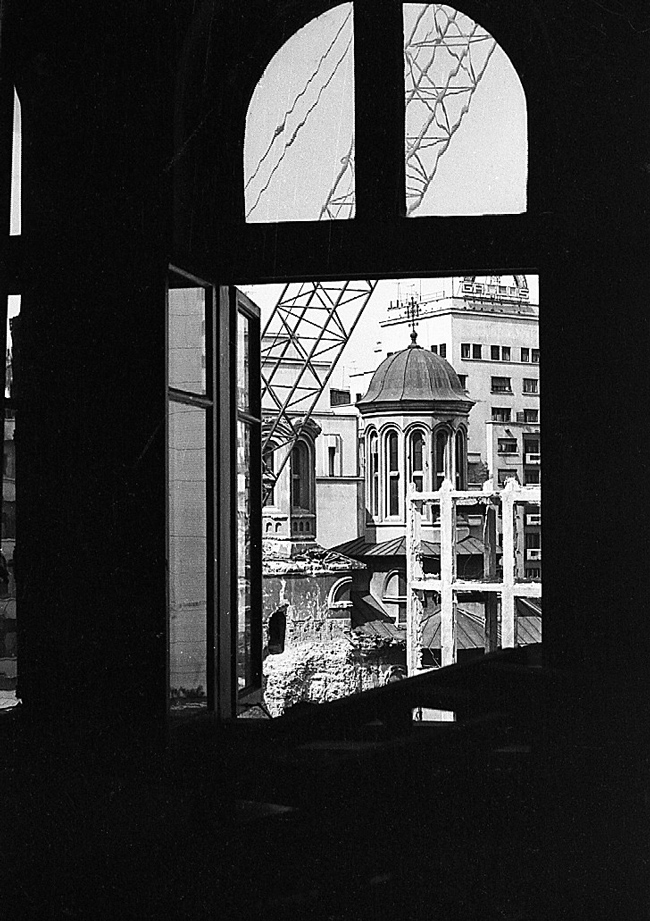
The Orthodox, we think we have the right faith, and we do very little of that. Our times are very difficult, especially difficult to preserve the spark of true Orthodoxy. But our faith, our Orthodoxy is, and it has always been, a suffering Orthodoxy, to use the phrase of St. Gregory the Theologian, who lived in the time, the 4th century, were the whole Constantinople, was given over to the Arians. Every church in Constantinople, including the main cathedral, belonged to the Arians, who stated that Christ is not God, and therefore we have no salvation. And St. Gregory took one small church, and with his fervor, he converted the whole city once more to Orthodox. But he saw that because of all the sufferings that people brought upon him, he saw that Orthodoxy indeed is only made real in the midst of suffering.
In the midst of sufferings and struggle, preserving and living by our Orthodox faith and seeing how much more people have to suffer for their Orthodox faith in other parts of the world. And we should think about Russia, how they suffer there. We should think about Uganda, places where they are very poor. They only have a pair of clothes to wear, they have no shoes, where they have very few people to instruct them. And the riches we have is unheard of there. We have so many books, we have this availability of the gospel. We had people who would write to us from Nigeria, the whole town that has written to get cross, because they had no Bible, they had no New Testaments.
We have several people in Ghana who are now spreading Orthodox literature, they go to non-Orthodox. The visiting Bishop Samuel, who was a Pentecost, in some kind of town in Ghana. A very fervent man. It’s obvious that what he needs is Orthodoxy. It’s not too well informed yet. He’s coming to Orthodoxy. By the way, he is very aware of struggle, of suffering. Preaching the gospel is a very similar way of doing it. He goes about. He came to America to get money to buy a loud speaker, a van. He goes about from village to village. He puts on music of some kind because he says the people of Ghana, they like music. They hear the music in the village. They come out. And then he puts on a loud speaker and begins to give them a Billy Graham type sermon. And they’re converting. People are being converted in Ghana and places like that. He came here and after visiting us he said he’ll be distributing Orthodox literature all over Ghana. Now, to help out, but he isn’t quite aware yet how deep it is that he got some of the points about it.
We have another missionary also the same way, I don’t know what sect he is. He has picked any kind of literature that we sent him: the New Testament, The Orthodox Word and Orthodox America, which he hands out to people in the villages of Ghana who read English. People who have been to school read English. Others have only the local language. Of course, in Russia it’s certainly difficult just to get the Gospel, which is the most forbidden book. In Russia you can even get the work of Soljenitsyn much easier than you can get the Bible. And if you’re caught by the police, with a copy even of Gulag Archipelago of Soljenitsyn, they say you can argue with the police. It is actually an historical book, it’s a literary book, and it isn’t that bad. The Bible is instantly put away. The Bible, the book, is considered apparently the most harmful thing that can be in Russia. But without a question, we are far away in America.
This is something definitely satanic.
Therefore, let us put resolve into our hearts that we, who are aware of these things, will be among the strugglers, not among those who say, “Who cares? Let somebody else do it. I am tired. I want my pleasures.”
Only One Thing Remains: God and His truth.
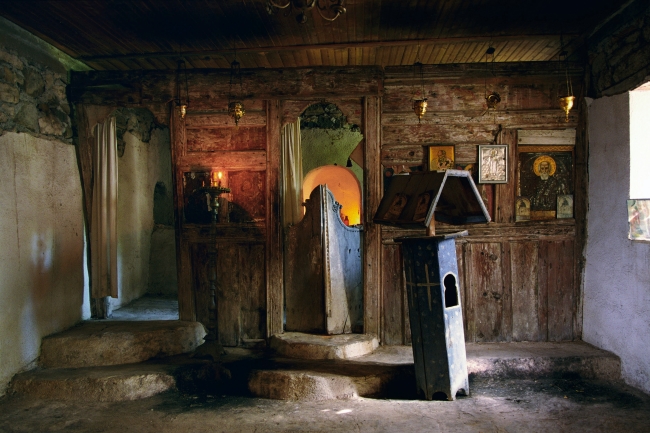
Let it be among those who are struggling. Everything in this life passes away. Only one thing remains: God and His truth. And this is the only thing worth striving for. Therefore we have a choice to follow the way of this world and the society that surrounds us, and you can do this very easily in the midst of the church. You can do it in an Orthodox parish. You can do it in an Orthodox seminary. You can do it in an Orthodox monastery. You can do it any place where there are Orthodox people who can go according to the ways of this world and not struggle, not sacrifice yourself. And thereby find yourself outside the church like the chief priests and priest, even though they were the ones who were the guardians of the church of Hebrews. Or we can choose the way of life, that is, the God who calls us and for whom our heart research.
Therefore let us take the way of St. Herman. Put into our hearts the soul where he uttered deep words, said to the simple people who were discussing what is the most valuable thing in life for them, the most precious thing in life. One defined it as their beautiful wife, another as owning a ship. All of them had worldly ideas in mind and he said, there’s only one thing worth dying for, and which is God. Therefore, let us put the resolve in our hearts from this day, from this hour, from this minute, that is, love God above all.
Questions & Answers
Well, people have been thinking of questions or ideas, discussing these themes, we’ve been talking about these two talks today.
The signs of the times
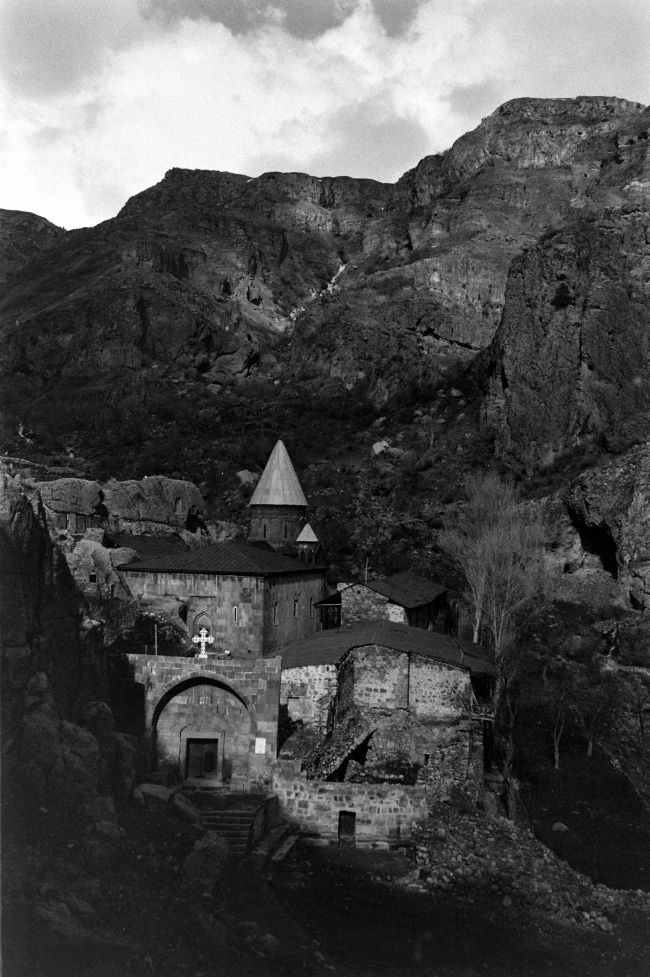
Yes.
You spoke of this searching as a sign of the times. In what sense is this worldwide search of the sign of the times. Is the preaching of the gospel before the end? Throughout the whole world?
Well, there are two ways. Sign of the times could mean just that it becomes a very significant thing which is characteristic of the times and later on people write history books that mention that this was going on this time. It’s one answer. One way in which you can interpret it.
The second way, yes, I think it is one of the signs. The end is approaching. That the gospel is being preached and that the end of the world is not going to be simply a triumph of evil. It’s also going to be a spreading of the gospel. In the gospel of St. Matthew, the final part of the chapter[4], we’re told the characteristics of the end of the world, the wars, rumors of wars, earthquakes, all kinds of plagues and everything else. At the same time, the gospel will be preached to all peoples. And it looks as if that’s what’s happened. Then Russia is bound up with the whole resurrection of the people after 60 years of atheism, which might also be an event, in fact, bound to be an event of significance for the whole world. The whole Russia throws off atheism, which is now infecting the rest of the world, but begins to preach orthodoxy. Of course, the world will look to Russia as a rare place. So in that respect, it looks as though also this is part of this preparation. We begin to hear about orthodoxy and come to the faith before the whole world evil culminates in this last page of history which is the reign of Antichrist.
I think it’s very important that you keep that in mind because we tend to look upon the end of the world in a very negative way. All these terrible plagues and stuff. There are all these different positive things about it. At least that it’ll be a culmination of evil and also a culmination of good. First we’re preaching the gospel, we’re preaching more than ever.
You’re a man of letters and a man of God and an orthodox monk, priest, aren’t you?
I’m a monk, priest, yes.
Ah, an Orthodox monk.
Yes.
I have a little problem. I’m an Orthodox layman. And the question is why, if within my mother church, there is such a struggle to as the new calendarites and the old calendars. When a new calendarite goes to Boston, Massachusetts, baptized according to the Orthodox Church, struggles according to the Orthodox Church. And when you say. . . I belong to the New Calenderite, there is no communion in the Boston Monastery with a monk priest that is the head of the Holy Monastery.
What’s his name?
Panteleimon.
I find it rather struggling for a true seeker within the Orthodox tradition and mother church. I do not like to see perhaps this quarreling or love quarreling among the two bodies. As an Orthodox child, I’m really angry and distressed by that.
Could you say something about that?
Well, there are two aspects.
One is that there is something going on in the Orthodox world which is very bad. This modern movement of modernism, ecumenism going along with the times, following after the Roman Catholics or following after the Protestants or following after the Unitarians who are going into the ditch. And the extreme reactions to that are caused by the fact that there’s really something wrong.
Why do the children have to suffer?
Well, I think if we had. . . More of that which we have to have as Orthodox Christians. More of a feeling of love, concern, that there will be less of that. It’s a very deep thing because it’s true, for example, the Roman Catholic Church was part of the Apostolic Church, began to fall away. And similar thing is happening now to the Church of the New-Calendars, although not fallen away yet, but still going in that direction. And there has to be people who are waking them up. Because there are people that are wandering way down. Take it away, it comes across. Sometimes it comes across in a fight, quarrels and stuff like that. The less we have of the actual fights, the better. The more we have of presenting tradition without having to descend to this level that Brother Alexey mentioned. It’s still unprofitable, reducing the whole thing to a fight. When you get to that level, there’s no, nobody is enlightened. You have to be somehow above that. And that’s a very difficult thing to do. The reality is the fact that part of the Church is going in that direction.
I think if we were more concentrating on keeping the Orthodox faith to ourselves and making our witness for love and concern for people, not just because we’re right. There would be much less of that and would be able to set forth the right principles without having to fight.
It appears to me that there was some time that I was also expressing my dissatisfaction about the new calendars and the old calendar. And finally I came to the conclusion that the reason that such a struggle exists is just because of a holiday, which is Christmas. And everybody wants to celebrate Christmas on the 24th of December by the new calendar. And then I said, so what is the difference celebrating on the 7th or 24th as well? He said, well, the spirit isn’t there. I said, what do you mean, spirit? Which spirit? The commercial spirit, suddenly I discovered. It’s all the music playing, everybody going shopping, buying gifts, exchanging gifts, having parties. That’s what people want. And perhaps that’s the thing that’s driving people to make a change, because none of the other holidays that we have seems to bother people. That is the only one that seems to bother. Nobody’s bothered that the Easter is on a different day to the Catholic. That’s fine with everybody. I’ve never seen it.
That is a very worldly thinking in back of the whole change.
Perhaps there’s another. I don’t know why there is a drive for somebody to change the calendar because I don’t understand that. Just for the sake of changing, because the calendar has an error or what it is.
No, it’s part of keeping up with the world. Because the Jews have their own calendar, the Muslims have their own calendar, nobody wants to force them, they don’t have any movement to change the calendar. Therefore, it’s the basic question of wanting to be like the world. And therefore, there’s an advantage not to be like that. Of course, it’s the very unfortunate thing, the way it’s developed. After the maxim of love and understanding, and quite a far oil on some of the wounds that are caused by all this. Quite a first thing, you have to keep alive the evangelical spirit of orthodoxy without making excuses or questions like that. Take you away from that spirit, and the infighting. That’s the first thing about that.
Father Seraphim was then asked, why is it not sufficient simply to believe in Christ? And also, are not all Christians united in this common faith?
Well, yes, I agree to further that. But it’s also true that we have the right faith. It’s a very definite thing. For example, this Bishop Samuel was visiting us from Ghana. He’s a little bit uncertain about the history of the church and so he went, “Why can’t we all be one? Doesn’t matter if you’re Protestant, Orthodox and so forth.” And, but it turns out that you go back, for example, Gregory the Theologian, when he came to Constantinople, all the churches were Arian. And if you say, “Well, it doesn’t make that much difference whether Arius is right or Orthodox are right.” If you examine what Arius believed, he believed that Christ was not God. If Christ is not God, then God did not come to earth to save men. Therefore, Christianity has no meaning. There is no point to being a Christian. And therefore if you hear the wrong teaching and you accept it, you lose your soul and your salvation. You have no salvation.
Our evil will resist God. We want to go towards God and St. Paul says, well, great saint St. Paul, who saw heaven. He said that I’m constantly doing what I don’t want[5]. My evil will is fighting against me. And if we’re sinners, how much more we have the same problem. Our evil will is fighting against us. The devil is putting all kinds of nets in front of us. And the path to God is a very difficult thing to get to. Not simple at all. I agree that we should, especially nowadays, well, I think we’re in a very advantageous circumstance because people are seeking and we have the opportunity to present them this goal of their search without so much fighting over the Catechetical points. I think it’s important not to get too much on that level of fighting. But we have to be quite definite that there is a true teaching. This teaching has been given to us by our Christ, to our salvation. We will put our heart and love into doing that. Then we’ll get to all kinds of dispositions.
Father Seraphim was then asked, what constitutes spiritual reading? and what type of book is to be recommended?
Well, one should read as much as one is eager to read and is available.
It should be first of all Scripture, then the Holy Fathers on the Scripture, then writings about spiritual life. The more intricate points of doctrine are for more specialists in that. Basically, we have many good books. If you look at the bookstore, we have lots of basic books. The most valuable ones are ones that talk about spiritual life. Like Unseen warfare, how to fight the battle against our own evil nature and against the devil. The works of St. John of Kronstadt, which sort of express the feeling of how to be an ordinary Christian.
And of course, scripture is very important. It has to be read, was read in church. It used to be the custom in monasteries that the scripture was read and then either before or after the service, at various points of the service, there would be commentaries of Holy Fathers on that, on the scriptures. Therefore, you get the whole sort of picture, how the scripture instructed the church. We don’t have that so much, but there’s still more and more commentary to do with it than not. They’re valuable books to read about how the Scripture should be interpreted. But if you read any kind of book on spiritual life, you will also find that Scripture is constantly being quoted, and that being quoted, it’s interpreted. And therefore, that also helps you to build an entire discussion. I would say just the more you eat the more it makes you hungry for it. But, of course, you can’t go into more just for the sake of reading to read more than your interest here, more than you can absorb. Each person finds his own level. He wants to read and so he’s inspired to read more and he’s inspired to read more. It increases his thirst.
Well, let’s tell them we were able to do things like that, to stand here for days. Reading spiritual literature, I think most people would benefit more from these than a little bit every day. Especially if you have a book, like a book of spiritual writings, like Unseen Warfare, St. John of Cronstadt, if you have a book on your table staff, which you’re reading at that time, and when you have some kind of temptations, you can pick up that book and open it and read it, and you’ll find that it gives all kinds of answers to your problems. At least it gets you out of your depression, whatever you might be in.
I think that you’re a man of God. And a monk. I believe Christ was the example. There was the cornice of the cup that fell away. Where do we find that?
No, I don’t think it’s separate. Search for the Spirit is bound us with a search for Orthodoxy. Many people are searching for something they call the Spirit, but it’s not, it’s dark. There are many spirits, and John says we have to try this, to see if they are of God. Many people are seeking, in general, for religious things, and the ones who will come to a successful end to it are the ones for whom this search is bound up with finding it in Orthodoxy.
Yes.
When you’re talking with all people about trying to talk to man about God. They question like, like, euthanasia, abortion, divorce, all kind of new morality, feminism, all those things kind of, kind of, they’re all different, but they all kind of have like an underlying thing that is staying. And how do you explain that to someone, whether Orthodox or not, when you decide to show them the edifying worldly outlook. What looks so hunting?
Very good question. Well, you have to probably place the whole thing in the context of Orthodox teaching, about the difference between a view of life which is directed towards eternal life and a view of life which is directed towards this world. And a person who is thinking only about this world, he will at first have a very difficult time to see that there is any other way. And therefore, if you can make him aware that there is eternal life, already he will begin to see the whole question differently. And until that time comes, it will be very difficult to understand the whole question.
Well, a Christian person, you should begin to ask him, why are you here, with charity? What are the logical results of believing in the genetics? and sort of point out that these things are not a correspondence of what Christ said in the Gospel, but they’ve been handed down.
Shallow and Deep Christianity
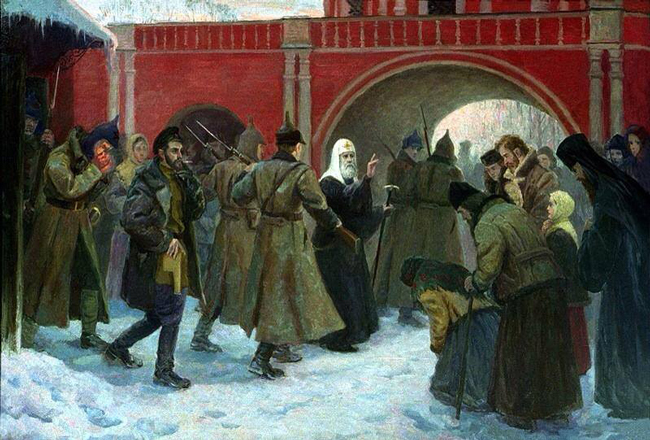
What with the kind of persons who think that, you know, we’re here to enjoy life, we receive God’s blessings, and we’ll be happy, and, you know, get along, and we all kind of, you know, enjoy this world and life. It is kind of a prelude before you go to heaven.
Oh, that kind of person you have to open up to the fact that to us as a Christian, Christianity is suffering. Christ himself went to the cross. Of course, they have their own answer that he did that for us so we don’t have to. That means we don’t have to take his example. That means to us, he’s just somebody who did it all for us. That’s another heresy. You have to look at St. Paul. St. Paul says you have to work out your salvation with fear and trembling[6]. We have to participate. We ourselves have to be saving our souls at the same time we receive God’s grace to save our souls. So those people, you have to point out all the parts of Scripture which they overlook, about suffering and that you will say to take up your cross and have, in fact, it’s both. These having persecutions, those who kill you will think they’re doing a good thing. Of course, it’s very difficult at first, but I think in a case like that, one has to try a little bit to open up a different perspective to people like that. Once they begin to see that, then you can discuss more.
What do you think of maybe on the type of idealism that is described in orthodox Christianity. What types of impressions do you get from the book written by Richard Wurmbrandt, Pastor Richard Wurmbrandt in Pasadena? Or could you, would you suggest this type of book for other Protestants who are very into their kind of own type of approach to God or something?
Well, yes, but he was here recently. One of the brothers went to see him. And he said that the Protestants don’t listen to me. They don’t want that kind of Christianity. Very few that are able to see that this is right. And he has the same problem as us. He noticed that people want to have a soft life, a worldly life. And his books are good for us, too, as it points out that the way people who have Christ firmly in their heart, they have to suffer for it. It’s a very important thing for us to realize. If you’re used to comforts and spirituality with comfort. Everything just the way you want. You’re not disturbed. You have nothing disturbing your ego or causing you problems. Then your Christianity is very shallow. So it’s like this. But then the deep thing comes to suffer. So the more people can be exposed to that, the better. But it’s usually very seldom. It’s very much less impact on people.
How do you explain that if that’s necessary.
Well, if you have to explain it, you probably won’t get across. You can try. You can expose a person, just exposing a person to how they suffer in Russia or Romania, for example. That’s a start that might have an effect. Or historically, how people have suffered in the past to this day. And it might have an effect. If they don’t see through the example, I think the most important thing is to give examples. If they don’t see through that or have a real kindred feeling that’s equal to their suffering, then they’ll have to sort things out. And until they do, they won’t see it. [57:40]
Well, it’s so awesome. I don’t know, I feel with the orthodox faith. . . I feel like a millionaire that is just dying to hand out all kinds of money to people and give them what they say that they want. And you’ve done it and nobody cares. They really don’t want what they say they do about religion. It’s kind of nice. It’s something different. It’s not interesting. But nothing really gets. . .
Yeah, that’s part of the suffering. That’s part of the suffering of being an orthodox.
More than we’ll study anything about our soul.
That’s, that happens, but it’s changing. There are a few who begin now to want, and there are many more coming up. Oh, there’s a new kind of thing in the air now, which is making people wake up a little bit.
Wouldn’t they have that? Yeah, it was not a question, but I think we should all think about, well, the seed we plant, we may not see it bear fruit.
Yeah, that’s also a very important point that St. Seraphim said: sow, sow everywhere, sow by the wayside, sow where there’s hard ground, sow where there’s good ground, sow every place, the word of God. And you might not see in your time what happened, how it comes up. Either that person you spoke to 20 years later will remember what you said or someone who knew him will hear through them about it or somebody you weren’t even talking to overheard something. It’s a very surprising way that people hear about the Word of God. So we should keep sowing the seed. When you see there’s totally no use, of course, you go someplace else and speak to somebody else. But it’s a very important thing to keep in mind that even though right now nobody seems to think of the people you’re speaking to, don’t respond. You should keep sowing. You can’t predict. Sometimes you find people that don’t look like they’re suffering, and actually they are, and they’re ready. Yes. And some people look like they are, and somehow they’re not. Either they’re satisfied with that state or something, and they’re not ready.
And once you begin to be a Christian, you’ll discover in your life that suffering comes. But then you have the means of coping.
Yes, well every Christian, every person who seriously wants Christ has Christ. Also other Christians, Protestant Christians who don’t know about Orthodoxy, they got a little bit, they got a little piece of it.
The very fact they’re converted to Christ, that’s the beginning of Orthodoxy.
There are two different schools. Well, yes, there’s a beginning. They can be on the way. They can come to find the Orthodoxy. The fulness is so different from the partiality.
Then you see there is a secret in this sacrament. There’s something in the sacraments.
That’s what we call grace. God gives His grace.
His mercy.
His mercy, in particular, grace which comes through the sacraments of the Church.
But I noticed in the talks when they’re talking about giving a talk about how I talk to other people who are out of the way. They would go, what makes us different? What was the special opportunity? What special thing that’s been lost that we can offer?
But before that makes much sense to a person, he has to be awakened to the idea that he needs it. Because something there which God gives that he doesn’t need.
Essentially, yeah. Again, we’re getting back to that. It means that some people had to recognize their personal helplessness in this situation. And, well, it seems like that. What do we have to do?
Well, there are different people who are placed in a different way. When you speak to people, you have to speak to them on the level they are. Some people, you can’t even talk about the sacrament yet. They don’t understand that it’s all about that. Well, the whole of our faith is the mystery of how people can respond at all from the middle of heaven when we’re living on earth.
A question arose as to whether or not Christianity exists outside the Orthodox Church.
Well, that’s the problem of language, because we use the same words to mean different things. We refer the word Christian to those who hold the right faith of Christ. That’s really the literal meaning of the word Christian. It’s the Christians who are called first Christians in Antioch, in the book of the Acts[7]. Therefore, the ones who believe rightly, who received from the apostles their faith in Christ, then continue to teach it.
And we use the word Christians to refer to Protestants. We use it because, first of all, they use the term themselves to refer to themselves. And secondly, because, in a sense, they are. Because the sort of Orthodox are objectively Christian and they’re actually living it. And Protestants, you can say, are kind of subjective Christian. They sort of want it and they think they have it or they’re grasping for it. They’re in . . . in a sense that they’re Christians, but they’re not Christians in the strict sense of the word.
But those who are trying to get there, in a sort of loose sense, call themselves also Christians. And some of them have very definite conversion experiences to Christ, unless they haven’t come far enough yet.
The comment was made that God’s love for everyone is equal and that somehow the Orthodox claim to be the church runs into conflict with this fact.
We are all the same. It’s just that some try harder than others.
We walk in God’s footsteps. We’re walking in his shoes. We’re living here. We have to find a place for ourselves. The right faith.
God calls us to his true faith. So he said, those who are baptized, who believe and are baptized, that he says, those who do not believe will be damned, because in the scripture that he damns people because they don’t believe. But if those who have the opportunity to believe, he actually let themselves do it because they reject it. But as he accepts that, it’s their own judgment of themselves.
The ecumenical council was called to find out what is the nature of Christ. There were the believers of Aries, and the Orthodox. And the Holy Spirit inspired them to hand down to future generations the Orthodox belief. So we’re not losing our salvation by having this wrong idea about this.
Yes. I’ve heard in discussions about, well, right now, we’re using the word Christian and the word the mind of Christ. I’ve heard the mention of the prophets in the Old Testament as their foreknowledge, their foresight, kind of was the revealing of the mind of Christ at that time. Although at that time, historically, in the laying out of time, Christ had not yet come to earth incarnate. And yet these people did it in a real mystical way because that’s the mind of Christ. And so, you know, you could, in our church, the church is always regarded as their members and part of it. And it’s, I don’t know, I think it’s a dimension to all sorts of speculations on the Christ or something.
That’s the whole teaching, how the Old Testament’s Prophets and patriarchs were delivered by the resurrection of Christ. He went to hell and brought them up. And then they became full-fledged saints in the church of Christ. Until that time they were in hell. Because even they could not attain salvation without Christ.
My question is the first of the previous questions, which mentioned that only through full-believer, full-Christianity somebody can be saved.
What happens to those people that have never been exposed to Christianity and they die?
Well, St. Paul talks about them in the book of Romans[8]. They have their conscience and they have the law of nature. And therefore they are judged on that basis. I know that God is just and God is merciful. They are judged according to the commandments of God. Christianity has the whole riches of God’s salvation. Those people that don’t know God, the person who didn’t reject him, didn’t know about him.
What happens with the people that were not baptized?
There have been different opinions expressed by different people in the different times. We leave them to the mercy of God. God is merciful and you know that he made us. He knows what we’re good for. He knew before we were made how long we would live. Therefore, then we lead to that. We know that this priest who is in front of us in fact should baptize a sick child. Very important, be baptized.
Could you round up? Not what we are saying, but how are we supposed to live. What are we to do? What are we called to?
We’re called to be conscious, serious, and not led astray by this state we are living in now in the free world, which is very deceiving. Because it looks as though we can be outwardly prosperous and have no particular problems and even improve Christianity a little bit and make it even more pleasant. And this creates a very deceptive thing, which is not, you read about what happens, for example, in the Soviet Union still today, even very, made much more sober. Like we’ll read tomorrow a little bit, something about a priest in Romania. Who consciously, three years ago, began this path of preaching the gospel, knowing that it’s going to be difficult to him, they’re going to arrest him and so forth. He said that after his last talk was given, after the interrogations, that I didn’t know how difficult it was going to be when I began this series of lectures. And so we see it from the outside, we see how the people are suffering there. And they should make us at least a little more sober about the . . . free and easy state in which we find ourselves. And most of all, we should feel responsible, since we have, there they have, we can say they have the gift of suffering, persecution. And here we have the gift of freedom. And each person, we can’t change places ordinarily. Therefore, each person has to use whatever talent you’ve given to her. And we who have freedom that opportunity to read, to even print the Word of God, to hear about it freely, to learn from it, we should be very responsible towards this advantage. Not become idle and self-centered and leaving the practice of Christianity to somebody else. We ourselves have to be practicing. The more we can find out about the struggles and sufferers of the past and of the present, the more we will be ourselves in it to suffer and sacrifice ourselves for Christ. The gospel is full of that. The writings of the Holy fathers are full of that. The lives of saints are full of that. The testimonies that come from Russia and many other places today are full of that, that we should become inspired by that. Begin to, in our free circumstances, begin to bear fruit. Begin to be not just hearing the Word of God, but being doers of the Word. And God, once we resolve to do that, God begins to show ways that we can be doing.
[1] And Jesus answered and said unto them, Take heed that no man deceive you. For many shall come in my name, saying, I am Christ; and shall deceive many. And ye shall hear of wars and rumours of wars: see that ye be not troubled: for all these things must come to pass, but the end is not yet. For nation shall rise against nation, and kingdom against kingdom: and there shall be famines, and pestilences, and earthquakes, in divers places. All these are the beginning of sorrows. Then shall they deliver you up to be afflicted, and shall kill you: and ye shall be hated of all nations for my name’s sake. And then shall many be offended, and shall betray one another, and shall hate one another. And many false prophets shall rise, and shall deceive many. And because iniquity shall abound, the love of many shall wax cold. But he that shall endure unto the end, the same shall be saved. Matthew 24 4-13
[2] Therefore, when he was gone out, Jesus said, Now is the Son of man glorified, and God is glorified in him. If God be glorified in him, God shall also glorify him in himself, and shall straightway glorify him. Little children, yet a little while I am with you. Ye shall seek me: and as I said unto the Jews, Whither I go, ye cannot come; so now I say to you. A new commandment I give unto you, That ye love one another; as I have loved you, that ye also love one another. By this shall all men know that ye are my disciples, if ye have love one to another. John 13 31-35
[3] we have need of the divine remedies that we may heal wounds inflicted, and ward off those which, though not inflicted, would else be received in time to come—-thus quenching afar off the darts of Satan, and shielding ourselves by the constant reading of the Divine Scriptures. It is not possible—-I say, it is not possible, for any one to be secure without constant supplies of this spiritual instruction. Indeed, we may congratulate ourselves, if, constantly using this remedy, we ever are able to attain salvation. But when, though each day receiving wounds, we make use of no remedies, what hope can there be of salvation?
Saint John Chrysostom, Four discourses, chiefly on the parable of the Rich man and Lazarus – Discourse 3
[4] And as he sat upon the mount of Olives, the disciples came unto him privately, saying, Tell us, when shall these things be? and what shall be the sign of thy coming, and of the end of the world? And Jesus answered and said unto them, Take heed that no man deceive you. For many shall come in my name, saying, I am Christ; and shall deceive many. And ye shall hear of wars and rumours of wars: see that ye be not troubled: for all these things must come to pass, but the end is not yet. For nation shall rise against nation, and kingdom against kingdom: and there shall be famines, and pestilences, and earthquakes, in divers places. All these are the beginning of sorrows. Then shall they deliver you up to be afflicted, and shall kill you: and ye shall be hated of all nations for my name’s sake. And then shall many be offended, and shall betray one another, and shall hate one another. And many false prophets shall rise, and shall deceive many. And because iniquity shall abound, the love of many shall wax cold. But he that shall endure unto the end, the same shall be saved. And this gospel of the kingdom shall be preached in all the world for a witness unto all nations; and then shall the end come. Matthew 24 3-14
[5] For we know that the law is spiritual: but I am carnal, sold under sin. For that which I do I allow not: for what I would, that do I not; but what I hate, that do I. If then I do that which I would not, I consent unto the law that it is good. Now then it is no more I that do it, but sin that dwelleth in me. For I know that in me (that is, in my flesh,) dwelleth no good thing: for to will is present with me; but how to perform that which is good I find not. For the good that I would I do not: but the evil which I would not, that I do. Now if I do that I would not, it is no more I that do it, but sin that dwelleth in me. I find then a law, that, when I would do good, evil is present with me. For I delight in the law of God after the inward man: But I see another law in my members, warring against the law of my mind, and bringing me into captivity to the law of sin which is in my members. Romans 7 14-23
[6] Wherefore God also hath highly exalted him, and given him a name which is above every name: That at the name of Jesus every knee should bow, of things in heaven, and things in earth, and things under the earth; And that every tongue should confess that Jesus Christ is Lord, to the glory of God the Father. Wherefore, my beloved, as ye have always obeyed, not as in my presence only, but now much more in my absence, work out your own salvation with fear and trembling. For it is God which worketh in you both to will and to do of his good pleasure. Philippians 2 9-13
[7] Now they which were scattered abroad upon the persecution that arose about Stephen travelled as far as Phenice, and Cyprus, and Antioch, preaching the word to none but unto the Jews only. And some of them were men of Cyprus and Cyrene, which, when they were come to Antioch, spake unto the Grecians, preaching the Lord Jesus. And the hand of the Lord was with them: and a great number believed, and turned unto the Lord. Then tidings of these things came unto the ears of the church which was in Jerusalem: and they sent forth Barnabas, that he should go as far as Antioch. Who, when he came, and had seen the grace of God, was glad, and exhorted them all, that with purpose of heart they would cleave unto the Lord. For he was a good man, and full of the Holy Ghost and of faith: and much people was added unto the Lord. Then departed Barnabas to Tarsus, for to seek Saul: And when he had found him, he brought him unto Antioch. And it came to pass, that a whole year they assembled themselves with the church, and taught much people. And the disciples were called Christians first in Antioch. Acts 11 19-26
[8] For not the hearers of the law are just before God, but the doers of the law shall be justified. For when the Gentiles, which have not the law, do by nature the things contained in the law, these, having not the law, are a law unto themselves: Which shew the work of the law written in their hearts, their conscience also bearing witness, and their thoughts the mean while accusing or else excusing one another Romans 2 13-15
Saint Herman Summer Pilgrimage, 1981

St. Seraphim of Platina – The Search for Orthodoxy

Pas de commentaire