
In addition to the theological “dialogue” with non-Christian religions and the thinly-disguised Eastern religious experiences described in previous chapters, there have been in recent years quite open attempts to develop a syncretism of Christianity with several Eastern religions, particularly in the realm of “spiritual practices.” Such attempts more often than not cite the Philocalia and the Eastern Orthodox tradition of contemplative prayer as being more kin to Eastern spiritual practices than anything that exists in the West. In a word, Holy Orthodoxy is being actively exploited in a kind of “dialogue of experience” with the Hindu Yogis and Zen Masters. Let us look briefly at the chief attempts that have been made in this direction, and then see why the religious philosophy which underlies them all is false and dangerous.
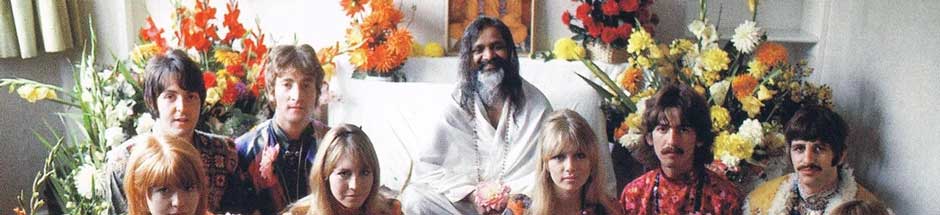
1. CHRISTIAN YOGA
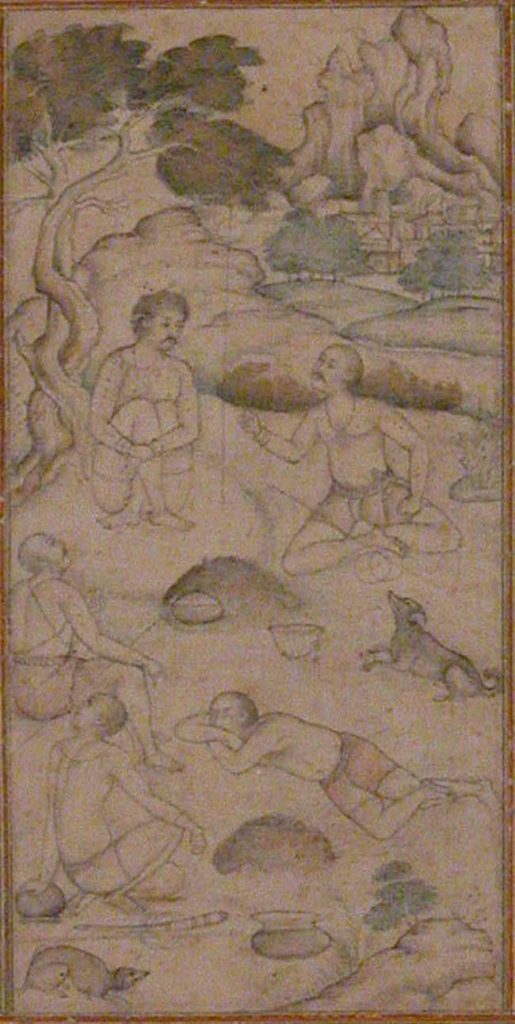
Hindu Yoga has been known in the West for many decades, and especially in America it has given rise to innumerable cults and also to a popular form of physical therapy which is supposedly non-religious in its aims. Nearly twenty years ago a French Benedictine monk wrote of his experiences in making Yoga a “Christian” discipline; the description that follows is taken from his book[1].
Hindu Yoga is a discipline that presupposes a rather abstemious, disciplined life, and is composed of breath control and certain physical postures which produce a state of relaxation in which one meditates, usually with the help of a mantra or sacred utterance which aids concentration. The essence of Yoga is not the discipline itself, but the meditation which is its end. The author is correct when he writes: “The aims of Hindu Yoga are spiritual. It is tantamount to treason to forget this and retain only the purely physical side of this ancient discipline, to see in it no more than a means towards health or beauty”[2]. To this it should be added that the person who for physical well-being is sing himself towards certain spiritual attitudes and even experiences of which he is undoubtedly unaware; of this more will be said below.
The same author then continues: “The art of the yogi is to establish himself in a complete silence, to empty himself of all thoughts and illusions, to discard and forget everything but this one idea: man’s true self is divine; it is God, and the rest is silence”[3].
This idea, of course, is not Christian but pagan, and the aim of “Christian Yoga” is to use the technique of Yoga for a different spiritual end, for a “Christian” meditation. The object of the Yoga technique, in this view, is to make one relaxed, content, unthinking, and passive or receptive to spiritual ideas and experiences. “As soon as you have taken up the posture, you will feel your body relaxing and a feeling of general well-being will establish itself in you” [4]. The exercises produce an “extraordinary sense of calm” [5]. “To begin with, one gets the feeling of a general unwinding, of a well-being taking hold, of a euphoria that will, and in fact does, last. If one’s nerves have been tense and overstrung, the exercises calm them, and fatigue disappears in a little time” [6]. “The goal of all his [the yogi’s] efforts is to silence the thinking self in him by shutting his eyes to every kind of enticement” [7]. The euphoria which Yoga brings “could well be called a ’state of health’ that allows us to do more and do it better on the human plane to begin with, and on the Christian religious, spiritual plane afterwards. The most apt word to describe it is contentedness, a contentedness that inhabits body and soul and predisposes us … toward the spiritual life” [8]. One’s whole personality can be changed by it: “Hatha Yoga influences character to the good. One man, after some weeks of practice, admits he no longer knows himself, and everyone notices a change in his bearing and reaction. He is gentler and more understanding. He faces experience calmly. He is content… His whole personality has been altered and he himself feels it steadying and opening out; from this there arises an almost permanent condition of euphoria, of ‘contentedness.’ ” [9].
But all of this is only a preparation for a “spiritual” aim, which begins to make itself felt in a very short time: “By becoming contemplative in a matter of weeks, my prayer had been given a particular and novel cast” [10]. Becoming extraordinarily calm, the author notices “the ease I felt in entering into prayer, in concentrating on a subject” [11]. One becomes “more receptive to impulses and promptings from heaven” [12]. The practice of Yoga makes for increased suppleness and receptivity, and thus for openness to those personal exchanges between God and the soul that mark the way of the mystical life” [13]. Even for the “apprentice yogi” prayer becomes “sweet” and “embraces the whole of man” [14]. One is relaxed and “ready to tremble at the touch of the Holy Ghost, to receive and welcome what God in his Goodness thinks fit to let us experience” [15]. “We shall be making our being ready to be taken, to be seized—and this is surely one of the forms, in fact the highest of Christian contemplation” [16]. “Every day the exercises, and indeed the whole ascetic discipline of my Yoga, make it easier for the grace of Christ to flow in me. I feel my hunger for God growing, and my thirst for righteousness, and my desire to be a Christian in the full strength of the word” [17].
Anyone who has read the account of “spiritual deception” in earlier pages of this book[18] will immediately recognize in this description of “Christian Yoga” precisely the same characteristics that mark the illusions of the followers of the “charismatic” movement: the same striving for “holy and divine feelings,” the same openness and willingness to be “seized” by a spirit, the same seeking not for God but for “spiritual consolations,” the same self-intoxication which is mistaken for a “state of grace,” the same incredible ease with which one becomes “contemplative” or “mystical,” the same “mystical revelations” and pseudo-spiritual states. These are the common characteristics of all who are in this particular state of spiritual deception. But the author of Christian Yoga, being a Benedictine monk, adds some particular “meditations” which reveal him as fully in the spirit of the Roman Catholic “meditation” of recent centuries, with its free play of fantasies on Christian themes. Thus, for example, having meditated on a theme of the Christmas Eve mass, he begins to see the Child in the arms of His Mother: “I gaze; nothing more. Pictures, ideas (associations of ideas: Saviour-King-Light-Halo-Shepherd-Child-Light again) come one after the other, march past… All these pieces of a sacred puzzle taken together arouse one idea in me … a silent vision of the whole mystery of Christmas” [19]. Anyone with the slightest knowledge of Orthodox spiritual discipline will see that this pitiable “Christian yogi” has fallen handily into a trap set by one of the lesser demons that lie in wait for the seeker of “spiritual experiences”: he has not even seen an “angel of light,” but has only given way to his own “religious fancies,” the product of a heart and mind totally unprepared for spiritual warfare and the deceptions of the demons. Such “meditation” is being practiced today in a number of Roman Catholic convents and monasteries.
The fact that the book concludes with an article by the French translator of the Philocalia, together with excerpts from the Philocalia, only reveals the abyss that separates these dilettantes from the true spirituality of Orthodoxy, which is totally inaccessible to the modem “wise men” who no longer understand its language. A sufficient indication of the author’s incompetence in understanding the Philocalia is the fact that he gives the name “prayer of the heart” (which in Orthodox tradition is the highest mental prayer, acquired by very few only after many years of ascetic struggle and being humbled by a true God-bearing Elder) to the easy trick of reciting syllables in rhythm with the heartbeat[20].
We shall comment more fully below on the dangers of this “Christian Yoga” when noting what it possesses in common with other forms of “Eastern meditation” which are being offered to Christians today.
2. CHRISTIAN ZEN
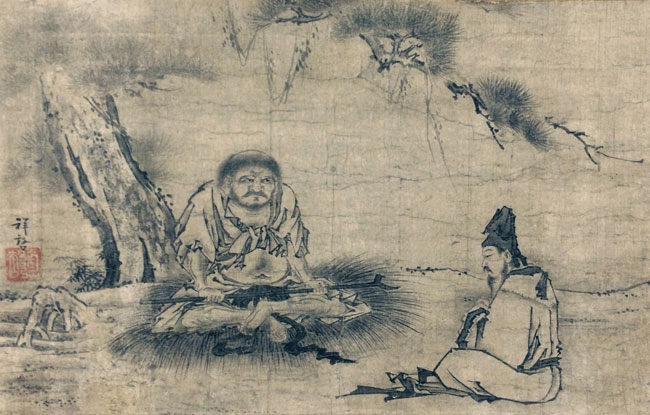
An eastern religious practice on a more popular level is offered in the book of an Irish Catholic priest: William Johnston, Christian Zen[21]. The author starts from basically the Same place as the author of Christian Yoga: a feeling of dissatisfaction with Western Christianity, a desire to give it a dimension of contemplation or meditation. “Many people, discontented with old forms of prayer, discontented with the old devotions that once served so well, are looking for something that will satisfy the aspirations of the modern heart” [22]. “Contact with Zen … has opened up new vistas, teaching me that there are possibilities in Christianity I never dreamed of.” One may “practice Zen as a way of deepening and broadening his Christian faith” [23].
The technique of Japanese Zen is very similar to that of Indian Yoga—from which it is ultimately derived—although it is rather simpler. There is the same basic posture (but not the variety of postures of Yoga), breathing technique, the repetition of a sacred name if desired, as well as other techniques peculiar to Zen. The aim of these techniques is the same as that of Yoga: to abolish rational thinking and attain a state of calm, silent meditation. The sitting position “impedes discursive reasoning and thinking” and enables one to go “down to the center of one’s being in imageless and silent contemplation,” [24] to “a deep and beautiful realm of psychic life” [25], to “deep interior silence” [26]. The experience thus attained is somewhat similar to that achieved by taking drugs, for “people who have used drugs understand a little about Zen, since they have been awakened to the realization that there is a depth in the mind worth exploring” [27]. And yet this, experience opens up “a new approach to Christ, an approach that is less dualistic and more Oriental” [28]. Even absolute beginners in Zen can attain “a sense of union and an atmosphere of supernatural presence” [29], a savoring of “mystical silence” [30]; through Zen, the state of contemplation hitherto restricted to a few “mystics” can be “broadened out,” and “all may have vision, all may reach samadhi” (enlightenment)[31].
The author of Christian Zen speaks of the renewal of Christianity; but he admits that the experience he thinks can bring it about may be had by anyone, Christian or non-Christian. “I believe that there is a basic enlightenment which is neither Christian nor Buddhist nor anything else. It is just human” [32]. Indeed, at a convention on meditation at a Zen temple near Kyoto “the surprising thing about the meeting was lack of any common faith. No one seemed the slightest bit interested in what anyone else believed or disbelieved, and no one, as far as I recall, even mentioned the name of God” [33]. This agnostic character of meditation has a great advantage for “missionary” purposes, for “in this way meditation can be taught to people who have little faith—to those who are troubled in conscience or fear that God is dead. Such people can always sit and breathe. For them meditation becomes a search, and I have found … that people who begin to search in this way eventually find God. Not the anthropomorphic God they have rejected, but the great being in whom we live, move, and are” [34].
The author’s description of the Zen “enlightenment” experience would seem to make it very kin to the “charismatic” experience that has been de- scribed in the preceding chapter: “I myself believe that within us are locked up torrents and torrents of joy that can be released by meditation—sometimes they will burst through with incredible force, flooding the personality with an extraordinary happiness that comes from one knows not where” [35]. Indeed, after returning to America after twenty years in Japan, the author was astonished to find that the Pentecostal experience is so close to the Zen experience, and he himself received the “Baptism of the Spirit” at a “charismatic” meeting[36]. The author concluded: “Returning to the Pentecostal meeting, it seems to me that the imposition of hands, the prayers of the people, the charity of the community——power that brings enlightenment to the person who has been consistently practicing zazen” [37]. He speculates that “a Christian Zen needs something like the charismatic renewal for its completion; and similarly, the charismatic renewal may well benefit from the silence of zazen” [38].
Little need be said in criticism of these views; they are basically the same as those of the author of Christian Yoga, only less esoteric and more popular. Anyone who believes that the agnostic, pagan experience of Zen can be used for a “contemplative renewal within Christianity” [39] surely knows nothing whatever of the great contemplative tradition of Orthodoxy, which presupposes burning faith, true belief, and intense ascetic struggle; and yet the same author does not hesitate to drag the Philocalia and the “great Orthodox schools” into his narrative, stating that they also lead to the condition of “contemplative silence and peace” and are an example of “Zen within the Christian tradition” [40]; and he advocates the use of the Prayer of Jesus during Zen meditation for those who wish this[41]. Such ignorance is positively dangerous, especially when the possessor of it invites the students at his lectures, as an experiment in “mysticism,” to “sit in zazen for forty minutes each evening” [42]. How many sincere, misguided false prophets there are in the world today, each thinking he is bringing benefit to his fellow men, instead of an invitation to psychic and spiritual disaster! Of this we shall speak more in the conclusion below.
3. TRANSCENDENTAL MEDITATION
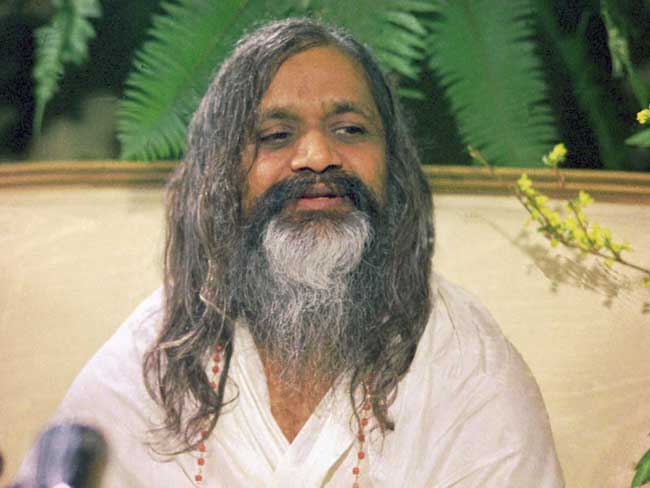
The technique of Eastern meditation known as “Transcendental Meditation” (or “TM” for short) has attained such popularity in a few years, especially in America, and is advocated in such an outrageously flippant tone, that any serious student of contemporary religious currents will be inclined at first to dismiss it as merely an over-inflated product of American advertising and showmanship. But this would be a mistake, for in its serious claims it does not differ markedly from Yoga and Zen, and a close look at its techniques reveals it as perhaps more authentically Eastern than either of the somewhat artificial syncretisms, “Christian Yoga” and “Christian Zen.”
According to one standard account of this movement[43], “Transcendental Meditation” was brought to America (where it has had its most spectacular success) by a rather ‘unorthodox’ Indian Yogi, Maharishi Mahesh Yogi, and began to grow noticeably about 1961. In 1967 it received widespread publicity when the popular singers known as the “Beatles” were converted to it and gave up drugs; but they soon abandoned the movement (although they continued to meditate), and the Maharishi hit his low point the next year when his American tour, together with another convert singing group called the “Beach Boys,” was abandoned as a financial failure. The movement itself, however, continued to grow, and by 1971 there were some 100,000 meditators following it, with 2000 specially-trained instructors, making it by far the largest movement of ‘Eastern spirituality’ in America, offering a course especially tailored for the American way of life, which has been sympathetically called “a course in how to succeed spiritually without really trying” [44], and by the Maharishi himself as a technique which is “just like brushing your teeth” [45]. The Maharishi has been strongly criticized by other Hindu Yogis for cheapening the long tradition of Yoga in India by making this esoteric practice available to the masses for money (the charge is $75 for the course, or $35 for students).
In its aims, presuppositions, and results, “TM” does not differ markedly from “Christian Yoga” or “Christian Zen”; it differs from them chiefly in the simplicity of its techniques and of its whole philosophy, and in the ease with which its results are obtained. Like them, “TM does not require any belief, understanding, moral code, or even agreement with the ideas and philosophy” [46]; it is a technique pure and simple, which “is based on the natural tendency of the mind to move toward greater happiness and pleasure… During transcendental meditation your mind is expected to follow whatever is most natural and most pleasant” [47]. “Transcendental meditation is a practice first and a theory afterwards. It is essential at the beginning that an individual does not think intellectually at all” [48].
The technique which the Maharishi has devised is invariably the same at all “TM” centers throughout the world: After two introductory lectures, one pays the fee and then comes for ‘initiation,’ bringing with him a seemingly strange collection of articles, always the same: three pieces of sweet fruit, at least six fresh flowers, and a clean handkerchief[49]. These are placed in a basket and taken to the small “initiation room, ” where they are placed on a table before a portrait of the Maharishi’s guru, from whom he received his initiation into yoga; on the same table a candle and incense are burning. The disciple is alone in the room with his teacher, who is himself required to have received initiation and to have been instructed by the Maharishi personally. The ceremony before the portrait lasts for half an hour and is composed of soft singing in Sanscrit (with meaning unknown to the initiate) and a chanting of the names of past “masters” of Yoga; at the end of the ceremony the initiate is given a “mantra, ” a secret Sanscrit word which he is to repeat ceaselessly during meditation, and which no one is to know except his teacher[50].
Thus the modern agnostic, usually quite unawares, has been introduced to the realm of Hindu religious practices; quite easily he has been made to do something to which his own Christian ancestors, perhaps, had preferred torture and cruel death: he has offered sacrifice to a god, to the deified guru of the Maharishi. On the spiritual plane it may be this sin, rather than the psychic technique itself, that chiefly explains the spectacular success of “TM. ”
Once he has been initiated, the student of “TM” meditates twice daily for twenty minutes each time (precisely the same amount recommended by the author of Christian Yoga), letting the mind wander freely, and repeating the mantra as often as he thinks of it; frequently, one’s experiences are checked by his teacher. Quite soon, even on the first attempt, one begins to enter a new level of consciousness, which is neither sleep nor wakefulness: the state of “transcendental meditation. ” “Transcendental meditation produces a state of consciousness unlike anything we’ve known before, and closest to that state of Zen developed after many years of intense study” [51]. “In contrast to the years that must be spent to master other religious disciplines and Yoga, which offer the same results that TM proponents claim, teachers say TM can be taught in a matter of minutes” [52]. Some who have experienced it describe it as a “state of fulfillment” similar to some drug experiences[53], but the Maharishi himself describes it in traditional Hindu terms: ‘This state lies beyond all seeing, hearing, touching, smelling, and tasting—beyond all thinking and feeling. This state of the unmanifested, absolute, pure consciousness of Being is the ultimate state of life” [54]. ‘When an individual has developed the ability to bring this deep state to the conscious level on a permanent basis, he is said to have reached cosmic consciousness, the goal of all meditators” [55]. In the advanced stages of “TM” the basic Yoga positions are taught, but they are not necessary to the success of the basic technique; nor is any ascetic preparation required. Once one has attained the transcendental state of being,” all that is required of one is twenty minutes of meditation twice daily, since this form of meditation is not at all a separate way of life, as in India, but rather a discipline for those who lead an active life. The Maharishi’s distinction lies in having brought this state of consciousness to everyone, not just a chosen few.
There are numerous success stories for “TM”, which seems to be effective in almost all cases: drug habits are overcome, families are reunited, one becomes healthy and happy; the teachers of IM are constantly smiling, bubbling over with happiness. Generally, TM does not replace other religions, but strengthens belief in almost anything; “Christians,” whether Protestant or Catholic, also find that it makes their belief and practice more meaningful and deeper[56].
These three techniques of “meditation” are so similar to each other as to be virtually identical in method and goal; and the spirit that under- lies them is precisely the spirit of any number of other “spiritual” movements today, from “science of mind” to “scientology.” They are all the offspring of a “post-Christian” attitude of mind that is dissatisfied with “traditional Christianity” and seeks some new “religious experience” that can satisfy the “modern soul.” This attitude of mind is essentially the same one that, a hundred years ago, produced spiritism, “Christian Science,” “New Thought,” and various dabblings in Eastern religions. Now, however, a concerted attempt is being made to give this pagan attitude a “Christian” veneer. The “charismatic revival” is also very clearly a part of this pseudo-spiritual orientation, being simply Victorian Pentecostalism adapted to today’s denominations. The pagan-sectarian movement of the “spirit” has now had time to work its way into even the most “conservative” church bodies, and ordinary “Christians” now are being presented with “spiritual experiences” as a normal part of the “Christian” life.
Orthodox Christians must be told absolutely to stay away from these movements. They have no foundation in Orthodox tradition or practice, but are purely the product of modern sectarianism and spiritism. They not only teach wrongly about spiritual life: they also lead one into a wrong spiritual path whose end is spiritual and psychic disaster, and ultimately the loss of one’s soul eternally. The artificial passivity inculcated by all these movements has one purpose: to “open up” a soul to the activity of demons. The goal pursued by them all alike is the same: demonic initiation.
[1] J—M. Dechanet, Christian Yoga, Harper & Row, NY, 1972; first English translation, 1960.
[2] p. 54
[3] p. 63
[4] p. 158
[5] p. 6
[6][6] p. 49
[7] p. 55
[8] p. 31
[9] p. 50
[10] p. 7
[11] p.6
[12] p. 13
[13] p. 31
[14] p. 183
[15] p. 71
[16] p. 72
[17] p. 11
[18] pp. 56–68
[19] pp. 161-2
[20] p. 196
[21] Harper & Row, New York, 1971.
[22] p. 9
[23] p. 2
[24] p. 5
[25] p. 17
[26] p. 16
[27] p. 35
[28] p. 48
[29] p. 31
[30] p. 30
[31] p. 46
[32] p. 97
[33] p. 69
[34] p. 70
[35] p. 88
[36] p. 100
[37] p. 101
[38] pp. 92–93
[39] p. 4
[40] p. 39
[41] p. 28
[42] p. 30
[43] All citations in this section are from Jhan Robbins and David Fisher, Tranquility without Pills (All about Transcendental Meditation). Peter H. Wyden Inc., N.Y., 1972.
[44] p. 17
[45] p. 104
[46] p. 104
[47] p. 13
[48] p. 22
[49] p. 39
[50] P. 42
[51] p. 115
[52] pp. 110–11
[53] p. 85
[54] p. 23
[55] p. 25
[56] p. 105

by Saint Seraphim of Platina [†1982]
The Orthodox Word, Vol. 11, No. 1 (60), January-February 1975, pp. 18-22, 27-30


Pas de commentaire