… and his meaning for Orthodox slavdom
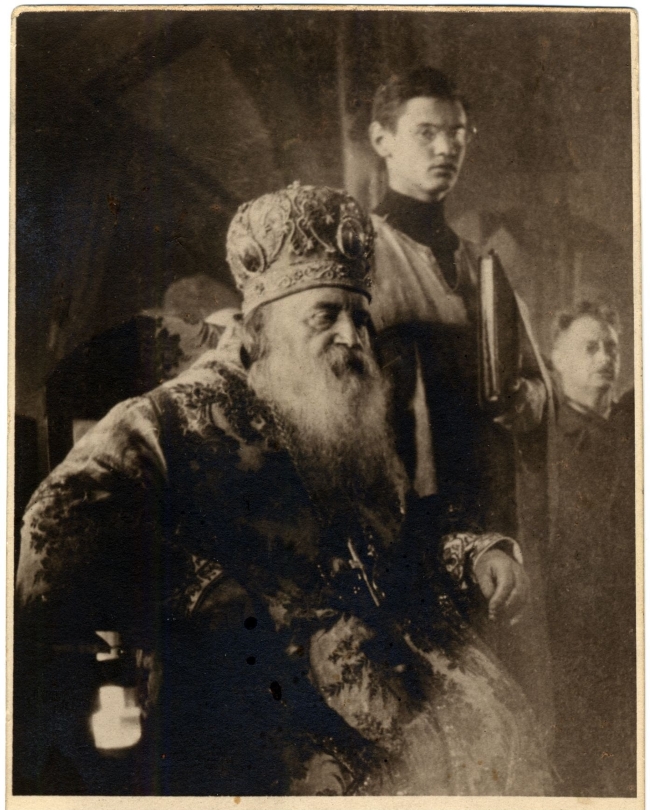
The following lecture was given in Belgrade at a solemn gathering in memory of His Beatitude Metropolitan Anthony (Khrapovitsky), the First Hierarch of the Russian Orthodox Church Abroad, by the renowned Serbian theologian Archimandrite Dr. Justin Popovich, at that time professor of dogmatic theology at the Theological Faculty of Belgrade University. The lecture was printed in the journal of the Orthodox theological faculty in Belgrade “Theology” (vol. XIV, No. 1, 1939, p. 40) and is presented here in an English translation by Joachim Wertz.
I.
I find myself in the position of an ant who must speak about the soarings of an eagle. Can an ant follow the path of an eagle? No! However, it is possible, from its ant’s perspective, for it to admire the eagle soaring in the heavens, and to stand frozen by the awe of sweet delight.
Therefore, with my ant’s tongue I want to babble on with some of my observations, and I ask you to pardon an ant, that he dare to speak of an eagle of Orthodoxy. Oh! I am firmly convinced that I possess neither the skill nor the capability to explain the mystery of the wondrous personality of His Beatitude, Metropolitan Anthony, but I am only able to bow down, in fervent awe and pious respect, before the wonders of his boundless love for Christ and his gracious love for man.
What is the mystery of the blessed Metropolitan Anthony? It is his boundless love for Christ. Examine any of his thoughts, or feelings, or desires, or works—and everywhere you will find, as a creative force, his immeasurable love for Christ. He lived and worked by the Lord Christ, and therefore everything that he possessed can be attributed to the God-Man. His biography is a Gospel copied in miniature. In reality, there exists in the world only one biography which has eternal value, and this is the biography of the God-Man—Christ; human biographies are valuable only insofar as they are united with it and proceed from it. Blessed Metropolitan Anthony was wholly united with it and proceeded from it. He, a Christ-bearer, following in the footsteps of the great apostle, desired, just between us, to know nothing save the Lord Christ and Him crucified[1]. Thus, the mystery of his exceptional personality matured into the mystery of the personality of the God-Man and now radiates off into all of its infinity.
Metropolitan Anthony’s boundless love of Christ has been shown to be directed toward the world as a blessed love for man. His touching love for man is nothing else but his prayerful love of Christ extended to men. He was boundlessly man-loving because he was boundlessly Christ-loving. For his tireless love for man he drew strength from his tireless love for Christ. The Divine Lover of men taught him the true love for man and gave him the powers of grace so that he could persevere in it at the cost of many sufferings. He loved man even in his sins; he never confused the sin with the sinner; he condemned sin but had mercy on the sinner. In his love for man he never lost strength, he never weakened, for he loved man through Christ and in Christ. It is impossible, according to the Gospels, to truly and completely love men, if God does not give us the graces of strength and blessed love. Human love for men quickly fades, if it is not nourished by God. True love for man is possible only through true love of God. The New Testament truth is: love for God is also love for man. This was taught to us by the Divine Saviour Himself, making the second dependent upon the first. What is more, the Lord reduced all His divine commandments to two: to the commandment of love for God and to the commandment of love for man. And thus He exclaimed: on these two commandments hang all the law and the prophets[2]. What is true of the prophets, apostles, and martyrs, is also true of our great Christ-loving and man-loving blessed Metropolitan Anthony, just as he is completely, by his entire personality, established on these two commandments.
Evangelical love for Christ, by an essential necessity, manifests itself as blessed love for man. However, by what powers are love of Christ and love for man established and maintained in the heart of man? By prayer, fasting, mercy, meekness, humility, chastity, and patience. Evangelical virtues nourish one another, live in one another, and each is fortified by the help of the other. The holy fathers, apostles, and ascetics are witnesses to this. Together with them, that great ascetic of our day, the blessed Metropolitan Anthony, is a witness to this, just as he was indefatigable and inexhaustible in his love of Christ and in blessed love for man, since he was indefatigable and constant in prayer, in fasting, in patience, in mercy, in humility, in meekness, and in chastity. Love for the Lord is revealed in the fulfillment of His commandments. This is the only sign by which one who honors Christ is distinguished from other men. Laboring tirelessly in evangelical struggles, this metropolitan who was zealous for Christ carved out for himself an vast and wondrous personality, which reminds one of the holy fathers.
Make no mistake about it, the blessedly reposed metropolitan is an exceptional patristic phenomenon in our time. He passed through our stormy century fearlessly, like an apostle, and with evangelical meekness, just like the great fathers of the Church, Athanasius, Basil, and Gregory passed through the fourth century. Looking at him, I say to myself: yes, even now one can actually live in a patristic manner, even now one can be humble and fearless like the fathers, even now one can actually be a bishop like the holy fathers. Why is this so? Because the Lord Jesus Christ is the same yesterday, today, and unto the ages; likewise, human nature remains the same from Adam until our own day. The fathers of the Church are different from us not by nature, but by will. In order to imitate them, we must, according to the words of St. Seraphim of Sarov, possess two qualities: resolution and effort of will. That mystery, the mystery of Christ, completely permeates these evangelical heroes. It uninterruptedly flows through the apostolate of the apostles, through the martyrdom of the martyrs, through the struggles of the ascetics. Even more must be said: it still flows continuously through the Orthodox Church, through its holiness, catholicity, apostolicity, and unity. This holy mystery has been successively transmitted with exceptional force even through the patristic personality of the blessed Metropolitan Anthony. His entire being is rooted in the holy fathers. Thence sprang his very touching love for the holy fathers; he could not even speak of them without compunction and tears. Thus his personality, his life, his labors can also be explained through the holy fathers. The holy fathers are his parents, his teachers, his tutors, his guides. They taught him holiness, they inspired him to asceticism, they gave him a catholic sensitivity and an orthodox consciousness. Tirelessly striving through patristic struggles, he transformed his own nature and habits into evangelical love, humility, meekness, and mercy. To realize the Gospel in one’s own nature—this is the very meaning of human existence in this world. In this the blessed metropolitan is an irreplaceable teacher and guide. Finding through struggles evangelical co-suffering love for men, he lived by it and produced it in others. In this was his wondrous might and his miraculous power.
Ladies and gentlemen! He is a wonderworker! By his touching love for man he worked wonders with human souls. Is it not a miracle to raise a dead soul to evangelical faith, to evangelical humility, to the evangelical life in Christ! Yes, it is a miracle; and it is a greater miracle than to raise a dead man from the grave or to move mountains. And of such miracles the metropolitan possessed many, very many. Who among you has not experienced such a miracle in his presence? As no one else, he knew, by prayer and meekness, how to enter into your soul and raise it from the death of sin. And already, imperceptibly, he mastered it. By what means? By co-suffering love. To master souls of men by chaste love is the evangelical way, the apostolic way, the patristic way, the Orthodox way. Every rule over men and governing of them that is not through love is not evangelical and neither patristic nor Orthodox, but rather is unevangelical, papal, and inquisitorial.
Having stood through evangelical struggles close to God, the blessed metropolitan drew all to God, inspired them to evangelical struggles, since the closer a man is to God, the closer he is to men as well. When the magnet of grace mightily attracts the soul to the higher worlds, then man is transformed into an arrow of prayer that passes through expanses and centuries with lightning-speed. The thunder of grace strikes the heart only after many struggles and labors, and then fills the soul with miraculous love and holiness. Such thunder struck the heart, zealous for Christ, of the humble metropolitan, and he by the power of evangelical co-suffering love drew men to himself, or rather, better to say, to Christ in himself. By grace-filled struggles, he converted his heart into a temple of the Holy Spirit, and by that he fulfilled the word spoken to him at his consecration: the first and main task of a pastor is that he, in his own heart, always prepare a temple for the Holy Spirit through spiritual struggles.
The mystery of the personality of Metropolitan Anthony is the mystery of all great monks. Here a man renounces himself for the sake of Christ in order that, through Christ, he is again united with men. There is nothing more fearful for man than to confront himself; and nothing is more unpleasant for man than to face other men; and nothing is more sorrowful for man than to come face to face with the world. Only when man accepts the Lord Christ as the mediator between himself and men, between himself and the world, and even between him and his very self; then his sorrow is transformed into joy, his despair into delight, and death into immortality; then the bitter mystery of the world is transformed into the sweet mystery of God. Thus, in the soul of man there is created a prayerful relationship not only toward God, but even a relationship toward much-suffering creation. Therefore, a man of Christ must be an inspired man of prayer. Such was the blessed metropolitan. Everywhere his relationship to God, to men, and to the world was one of prayer.
Compunctionate through his co-suffering love for the world, our holy Vladyka received from God the gift of tears. He would weep from compunction, he would weep from sadness, and he would weep from joy. This world is full of causes for weeping and grief. Being always in a prayerful disposition, the blessed Vladyka especially shed tears when serving the holy liturgy. And when he had to preach on some story or event, his tears would pour down and spasms would grip him in the course of his speech. In his all-embracing co-suffering love, he wept for us and with us. He wept for everyone and everything, and thus drew all to submission to Christ. In this way he very much resembled those great and holy ones who grieved for the human race: Ephraim the Syrian, Isaac the Syrian, and Simeon the New Theologian.
In more recent times no one has exercised such a powerful influence upon Orthodox thought than the blessed Metropolitan Anthony. He lead Orthodox thought away from the scholastic-rationalistic path and onto the blessed ascetic path. He showed and proved indisputably that the eternal power of Orthodox thought lies in the holy fathers. Only the saints are true enlighteners, and thus true theologians. For in their own lives they experienced the truths of the Gospel as the essence of their own lives and thought. All dogmatic truths are given to us in order that we may transform them into the life and spirit of our spirit, since they are, according to the words of the Saviour, spirit, truth, and life. Therefore, this godly-wise hierarch has written: “The truth of God is comprehended in no other way than through the gradual perfection in faith and virtue. Hence, this knowledge is by nature tied to our inner rebirth, with the stripping off of the old man and the putting on of the new[3]”.[4]
Along with the immortal Khomiakov, our holy Vladyka enlivened patristic theology and showed that Orthodoxy is Orthodoxy only by virtue of its patristic holiness and apostolicity. Nothing is so foreign to Orthodoxy as lifeless scholasticism and icy rationalism. Orthodoxy before all else and above all is an experience and life of grace, and through that the blessed knowledge of God and the blessed knowledge of man. The Orthodox Church embraces the whole of life, with all its complexities, only leaving no place in it for malice and sin. The holy hierarch writes: “The Church encompasses in itself all sides of human life, only malice and sin do not enter into her. Our entire life should be a continuation of those liturgical prayers that are so dear to all of us.”[5]
Only a life of prayer in God permits correct thinking about God. Metropolitan Anthony recognized this great truth of Orthodoxy in the prayerful communion with all the saints. And together with them, he experienced in himself, as his own experience, the universal experience—the sense and consciousness of the Church—the love for Christ surpassing all (see Eph. 3 18-19[6]). Yes, only a great monk can become a great hierarch, since a great monk, with the help of the grace of God, is able to conquer his own passions and, with godly wisdom, master his own soul. This grace gives him the power and the might, the skill and the love, as well as the right, according to the Gospel, to master men’s souls. “The essence of Christianity,” our great hierarch and great monk says, “is the renunciation of life’s pleasures; it is to be found in the striving for purity, in the readiness to suffer for thfe truth, in the acquisition of the feeling of constant love for God and for men, and in the forgiveness of the offences of enemies[7].” “It is impossible to stand up for the truth without sorrows and deprivations.”[8]
Even now Orthodoxy possesses the full force that it had in the time of St. Gregory the Theologian, who directs, “It is first necessary to purify oneself, and then to cleanse others; first one must be filled with wisdom, and then teach others wisdom: first one must become a light unto himself, and then enlighten others also; first one must himself draw near to God, and then draw others as well; it is necessary first of all to sanctify oneself, and then to sanctify others as well.”[9]
And our blessed Vladyka wrote of himself: “My scholarly work was not a system according to strictly defined principles—it was my most internal life, it was the very breath of my spiritual life, it was my walking before God, the crystallization and contemplation of His all-powerful grace.”[10] That which the holy Vladyka said of his friend, Bishop Michael[11], pertains above all to himself:
“He was a great spirit, an apostolic spirit, who extended far beyond the bounds of his own personal life, and, in a dynamic outburst of love and co-suffering, desired to draw all men and the entire universe into his embrace, and purifying all by the flame of prayer, to raise them to Christ. Indeed, Bishop Michael was one of those few men, who are barely aware of the surrounding external activity of life, yet moving in the midst of it, perform the works of their calling; as a matter of fact, they are always occupied with a single thought, a single feeling, sorrow for the sinful world, a burning desire for the common salvation and the good; who desire to become all things to all men, that by all means some may be saved’[12]. They are those chosen vessels who, together with Christ, could say: “I am come to send fire on the earth; and what will I, if it be already kindled[13]?”. These are they who, grieving over human faults, over injustice and ecclesiastical discords, cry out in their hearts: the zeal of thine house hath consumed me’[14], and can therefore repeat, concerning themselves, the words of the divine Paul: ’I affirm by my conscience, that I die daily’. ”[15]
The ideal of a pastor, which the great hierarch represented, found its complete fulfillment in him; for pastoral service consists of the merging of the pastoral spirit with the moral life of every person, in the experience of co-suffering love for the moral life, the moral struggle of his flock, in his prayers for that flock, as if theirs were his own personal sins[16]. For such a pastoral podvig, the Chief—Pastor Himself, the Lord Christ, gives the power and means.
II.
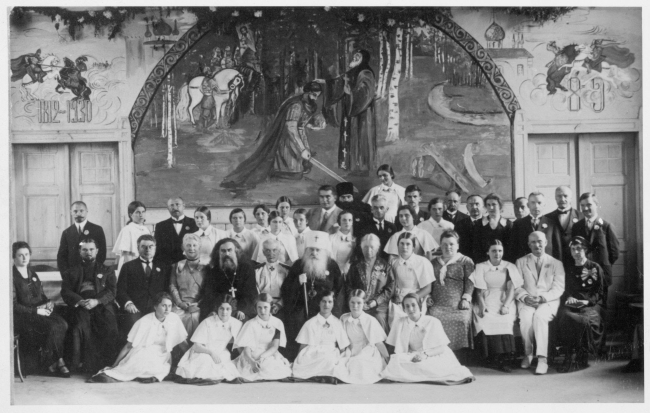
The ascetical personality of the blessed Metropolitan Anthony has tremendous meaning for the entire Orthodox world. How is that? Precisely in that he is the sole patristic manifestation in our day and that he perceived, in a patristic manner, the universality of Orthodoxy. The basis of his life and labors was, before all else and above all, Orthodoxy. Equally close and dear to him were Orthodox Syrians, Orthodox Greeks, Orthodox Bulgarians, Orthodox Romanians, and Orthodox Serbs. In his vast soul a place was found for all the Orthodox. And he attracted everyone by his boundless love. He became all things for all men, so as to save at least some. It is an apostolic and Orthodox truth: a nation possesses its worth only through Orthodoxy and in Orthodoxy. Without that, a nation is devoid of eternal worth. Or better yet: a nation without Orthodoxy is nothing other than a mere string of walking corpses. None of our contemporaries has perceived the correlation of nationality to Orthodoxy in such an evangelical, patristic, and Orthodox manner as has our holy Vladyka, Metropolitan Anthony. A people exists that it may be sanctified and enlightened by the eternal truth and the eternal life of Orthodoxy. That which is great and eternal in any nation is Orthodoxy, and in it is the Lord Christ.
In Orthodoxy Russia is great—this is the fundamental position of the great hierarch of the Russian land. Orthodoxy is Russia’s greatest worth, Russia’s singular meaning, her most exalted mission; Russia is eternal through Orthodoxy. That which Dostoevsky prophesied about Russia and about Orthodoxy, our great saint put into practice within the Church. The mysteiy and might of Russia lies in Orthodoxy. In it lies the mystery and might of all Orthodox Slavdom. Dostoevsky’s idea of the “universal church” found in the holy metropolitan a brilliant example. The Russian nation derives from universal Orthodoxy its boundless love for man and its evangelical ability to be as one with other nations, not losing in the process its own Russianess. Where does the faith of the Russian nation lie? —It lies, answers the holy Vladyka, in the fact that the nation accepted in its heart, the two main all-encompassing commandments of the Gospel: humility and co-suffering love; and these commandments made all Orthodox peoples dear to the Russian heart, as well as all humanity. The power of this certainty is great, and it seizes eveiy man, sincere in his drawing close to the people[17].
Here, right before our eyes, Dostoevsky’s prophecy of the Russian universal man is realized in the Christ-bearer, blessed Metropolitan Anthony’. But who could become as one with other men, to enter into their souls in such a way as to suffer their sufferings, to grieve with their sorrows, to pain over their griefs? It could only be he, that hierarch of the Russian land great in humility, filled with boundless co-suffering Gospel love. Christ-like universal humanity is the precious gift of Orthodox Russia to Slavdom and all mankind. This she received, for her humility, from the Lord Christ, Who was incarnate in man, and by that has shown His boundless love. The characteristic and power of theandric love is the ability of one to become one with the loved one, that he may be saved from sin and death.
Orthodox universality penetrates to the depths of the Russian national consciousness. The Russian national consciousness, declares the holy metropolitan, is not a racial or tribal consciousness, but a confessional and religious one[18]. The patriotism of the Russian people is primarily religious and Orthodox. The people love Russia “as the guardian of divine truth, as the minister of evangelical piety[19].” “We love Russia,” declares the blessed Vladyka, “because she preserves in herself the Russian idea, the Russian spiritual nature, the Russian way of life. This idea is the Kingdom of God, this nature is the striving for holiness, this way of life is an expression of the efforts of the seven-hundred year life of the country and the nine-hundred year life of the people to establish evangelical righteousness in the land, to forsake all in order to find Christ, to make His will, the canons of His Church, the law of the life of the society[20].”
Holy Russia is not a dream or a fantasy, but a living ideal, which is realized in the historical life of the Russian people. “Our homeland,” the blessed Vladyka points out, “is the incarnation of the Gospel in the way of life and character of the people, an incarnation of the Kingdom of God. Our Russia is not merely a jurisdictional entity or a government, no—it is a universal, all-embracing idea. To love it, to understand it, to plant it in our soul and the other areas of life is dependent upon each one of us; this is our duty, this is our sincere joy, this is the reconciliation of all both with life and with our lot[21].”
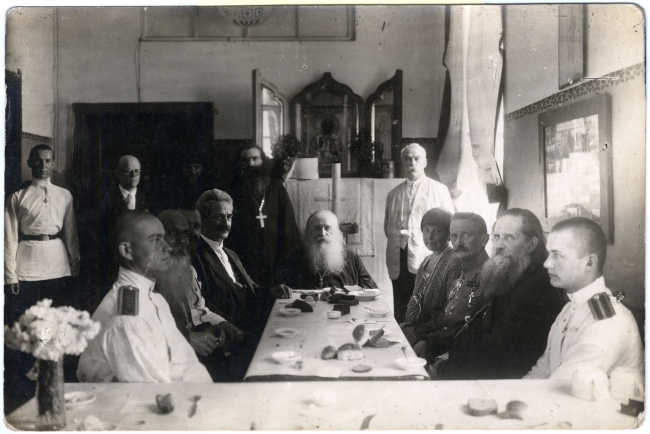
What do we, Orthodox Slavs, expect from our brothers, the Orthodox Russians? You lead us along the way of the Orthodox Christian truth; be our tireless leaders in the realization of the eternal evangelical truths; guide us to heaven and to heavenly righteousness. This you can do, in as much as Holy Russia has given us a multitude of miraculous realizations and wondrous expressions of the eternal Orthodox truths. In the words of the holy metropolitan: “Holy Russia must unite all the eastern peoples and be their guide to heaven[22].”
If our time possesses a great and holy preacher, apostle and prophet or religious, ecclesiastical, universal patriotism, then this is the great hierarch of the great Russian land, the blessed Metropolitan Anthony. According to his interpretation, separate national forms of patriotism have sense and value only in as much as they derive their sense and their value from religious, ecclesiastical, universal patriotism[23]. The Slavophilism of our Vladyka is not a racial, not a tribal chauvinism, but Orthodox and evangelical. Thus, in the name of such a Slavophilism he calls all to the service of others, and to humility before God and men[24].
Slavophilism is of no value in itself, except as the bearer and vessel of Orthodoxy. This is the fundamental idea of our Vladyka and Dostoevsky as well. And Orthodoxy is that new word, which Slavdom, headed by Holy Russia, must proclaim to the world, proclaiming it with humility, serving all nations in meekness and evangelical truth. Therefore, real Orthodox can never be chauvinists. I recall once, in a conversation with me in 1926, the blessedly reposed metropolitan related to me the following: “On Athos there is a custom that a monk who does not forgive offences is punished by being made to omit the words ‘and forgive us our debts, as we forgive our debtors,’ at the reading of the Lord’s Prayer, until such a time when he has forgiven the offence committed against him. And I myself have suggested,” added the great saint, “that the chauvinist-nationalists not read the ninth article of the Symbol of Faith.”
The evangelical patriotism of the Lord Christ should be considered the greatest worth of one’s nation and the only true reason for its existence. For “what can take the place of the Lord Christ for a nation,” asks the blessed metropolitan. Can the trifling existence of a government, which lacks any rational meaning if it is founded merely on national self-love, and becomes foreign to the religious idea, really take that place? Such a nation is already not a nation but a rotting corpse, that considers its own decay to be life. In actuality it has no life, but in it and on it there live only moles, worms, and repulsive insects who rejoice that the body has died and is rotting, since in a living body there would be nothing for them to live on, and they would not be able to satisfy their gluttony[25].
That which has meaning for the spiritual life of each person separately, the same is also important for the collective spiritual life of a people. The laws of the Gospel are the same in both instances. Therefore, the holy metropolitan counsels and homilizes: “As man’s individual personality is stifled in its development and becomes empty and shallow when man makes himself the object of his activity; so also the collective personality of a nation attains the full development of its talents only when it is not an end in itself, but rather a means for the disinterested fulfillment of its divine destiny[26].”
If we were to crystallize this principle of Vladyka, it would read as follows: the Russian, Serbian, and Bulgarian nations can be great only if the goal of their existence be the collective realization of the commandments of the Gospel. Otherwise, “Serbianism,” “Russianism,” and “Bulgarianism” are reduced to senseless and pernicious chauvinism. If “Serbianism” flourishes not by the power of evangelical podvigs and not to Orthodox catholicity, then it will choke in its own egoistic chauvinism. What is profitable for Serbdom is profitable for other Orthodox nationalities as well. Nations pass, the Gospel is eternal. Only in so far as a nation is filled with the eternal evangelical truth and righteousness, does it exist, and itself becomes and remains eternal. Only such a patriotism can be justified from an evangelical point of view. This is the patriotism of the holy apostles, the holy martyrs, the holy fathers. When the emperor-tormentor asked the holy martyrs Acindynus, Pegasius, and Anempodistus where they were from, they answered: “Are you asking us, O Emperor, about our homeland? Our homeland and our life is the most holy, consubstantial, and undivided Trinity: the Father, the Son, and the Holy Spirit, the one God[27].”
The blessed Metropolitan Anthony is the most gifted contemporary representative of Russian Orthodox nationalism, a nationalism consecrated and enlightened by Christ; a nationalism by which all men are brothers in Christ; a nationalism by which the mighty must serve the weak, the wise the unwise, the humble the proud, the first the last. Growing out of patristic Orthodox universal patriotism, the blessed Vladyka can only be appreciated from the same apostolic patristic perspective. We can apply to him what St. Gregory of Nyssa said about his own brother, St. Basil, after his death: “Wherein lies Basil’s noble origin? Where is his homeland? His origin is his affinity to divinity, and his homeland is virtue[28].”
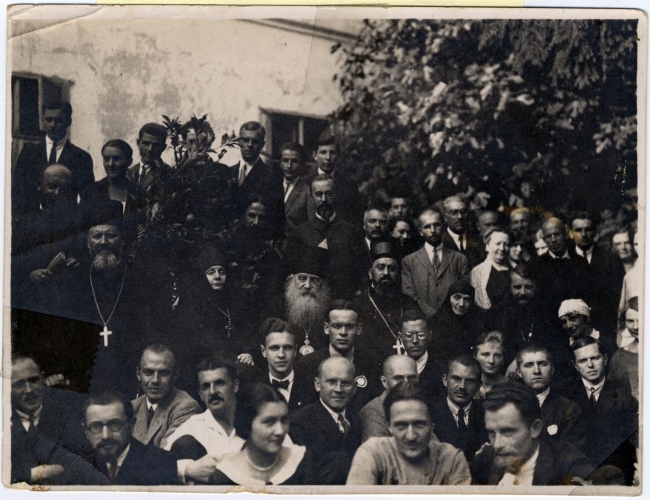
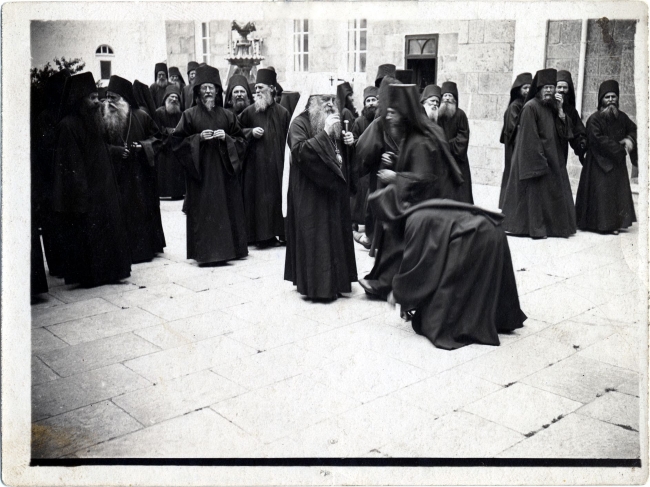
Because of his evangelical virtues and especially due to his Orthodox catholicity, the great and holy Vladyka, the blessed Metropolitan Anthony, was dear and close to us Serbs, as he was to you Russians. He was our common treasure, our common saint and enlightener, our common guide and leader. Permit me to confess before you—the blessed Metropolitan Anthony was the actual master of my soul, the true bishop and overseer of my heart. In his person I had my most dear spiritual father. Always of a pan-Orthodox frame of mind, he gathered us foreign Orthodox under the broad wings of his great Russian soul, as a hen gathers her nestlings under her wings. Many times I felt the power of his pan-Orthodox love—for him, we Serbs were as dear as the Russians. A touching, all-embracing power was shed forth from him. I would call it Orthodox catholicity. If you will, he was a contemporary pan-Orthodox patriarch. By his ascetic life he became and has always remained, a rule of faith and an image of meekness, a God-inspired nourisher of hierarchs and a fervent intercessor for our souls. In this world he always lived in prayerful communion “with all the saints.” Without a doubt, now, even in that other world, he lives with all the saints, there “where the sound of those rejoicing is ceaseless, and the joy of those beholding the ineffable goodness of Christ is unending.”
Having before us the wondrous and delightful personality of the holy and blessed Metropolitan Anthony, what remains for us Serbs? We bow to the ground before the great hierarch and saint of the Russian land, who sanctified and strengthened the Serbian land in Orthodoxy by his sojourn of many years. We prayerfully bow and humbly throw ourselves at the feet of the holy and glorious metropolitan. We bow to him for his boundless love of Christ and tender love for man, we bow to him for his meekness, for his humility, for his loving kindness, for his prayerfulness, for his life in Christ and for his suffering for Christ. We throw ourselves before him because of his tireless love for us who are small and worthless. We bow before the great Russian nation, for she has given Orthodoxy such a great and holy hierarch, who by his own evangelical light illuminated even our tormented Serbian land. He is yours—in this is your joy and delight; but he is also ours. Oh! I know that we Serbs are not in a position to compare ourselves with the great Russian nation, that tortured Christ-bearer and God-bearer. Neither are we in a position to compete with you. However, permit us, as your least and lowest brothers, nevertheless to compete with you in one thing—in our immeasurable love for the great saint of the Russian land, the blessed Metropolitan Anthony, and in prayerful reverence for him, for we as well as you, pray to him, fall down before him, that he may pray day and night before the throne of the sweetest Lord Jesus, not only for the great much-suffering Russian people, but also for the Serbian people, and for the tormented Serbian land.
[1] And I, brethren, when I came to you, came not with excellency of speech or of wisdom, declaring unto you the testimony of God. For I determined not to know any thing among you, save Jesus Christ, and him crucified. And I was with you in weakness, and in fear, and in much trembling. And my speech and my preaching was not with enticing words of man’s wisdom, but in demonstration of the Spirit and of power: That your faith should not stand in the wisdom of men, but in the power of God. 1 Corinthians 2 1-5
[2] Then one of them, which was a lawyer, asked him a question, tempting him, and saying, Master, which is the great commandment in the law? Jesus said unto him, Thou shalt love the Lord thy God with all thy heart, and with all thy soul, and with all thy mind. This is the first and great commandment. And the second is like unto it, Thou shalt love thy neighbour as thyself. On these two commandments hang all the law and the prophets. Matthew 22 36-40
[3] But now ye also put off all these; anger, wrath, malice, blasphemy, filthy communication out of your mouth. Lie not one to another, seeing that ye have put off the old man with his deeds; And have put on the new man, which is renewed in knowledge after the image of him that created him: Where there is neither Greek nor Jew, circumcision nor uncircumcision, Barbarian, Scythian, bond nor free: but Christ is all, and in all. Colossians 3 8-11
[4] The Moral Idea of the Dogma of the Most-Holy Trinity; in the Collected Works of Metropolitan Anthony of Kiev and Galich, Belgrade, 1935, p. 11.
[5] Sermon at the moleben to the Bodiless Hosts, in Collected Works, pp. 182–183.
[6] For this cause I bow my knees unto the Father of our Lord Jesus Christ, Of whom the whole family in heaven and earth is named, That he would grant you, according to the riches of his glory, to be strengthened with might by his Spirit in the inner man; That Christ may dwell in your hearts by faith; that ye, being rooted and grounded in love, May be able to comprehend with all saints what is the breadth, and length, and depth, and height; And to know the love of Christ, which passeth knowledge, that ye might be filled with all the fulness of God. Now unto him that is able to do exceeding abundantly above all that we ask or think, according to the power that worketh in us, Unto him be glory in the church by Christ Jesus throughout all ages, world without end. Amen. Ephesians 3 14-21
[7] Talk in honor of the holy Great Martyr Barbara, in Collected Works, p. 242.
[8] Talk at a moleben, in Collected Works, p. 221.
[9] Orat. II, 71 ; P. gr., t.35, col.480B
[10] Epistle to the Students of the Kazan Theological Academy in Collected Works, p. 280.
[11] Michael, Bishop of Simferopol, reposed August 19, 1898.
[12] And unto the Jews I became as a Jew, that I might gain the Jews; to them that are under the law, as under the law, that I might gain them that are under the law; To them that are without law, as without law, (being not without law to God, but under the law to Christ,) that I might gain them that are without law. To the weak became I as weak, that I might gain the weak: I am made all things to all men, that I might by all means save some. And this I do for the gospel’s sake, that I might be partaker thereof with you. Know ye not that they which run in a race run all, but one receiveth the prize? So run, that ye may obtain. 1 Corinthians 9 20-24
[13] And the Lord said, Who then is that faithful and wise steward, whom his lord shall make ruler over his household, to give them their portion of meat in due season? Blessed is that servant, whom his lord when he cometh shall find so doing. Of a truth I say unto you, that he will make him ruler over all that he hath. But and if that servant say in his heart, My lord delayeth his coming; and shall begin to beat the menservants and maidens, and to eat and drink, and to be drunken; The lord of that servant will come in a day when he looketh not for him, and at an hour when he is not aware, and will cut him in sunder, and will appoint him his portion with the unbelievers. And that servant, which knew his lord’s will, and prepared not himself, neither did according to his will, shall be beaten with many stripes. But he that knew not, and did commit things worthy of stripes, shall be beaten with few stripes. For unto whomsoever much is given, of him shall be much required: and to whom men have committed much, of him they will ask the more. I am come to send fire on the earth; and what will I, if it be already kindled? Luke 12 42-49
[14] And the Jews’ passover was at hand, and Jesus went up to Jerusalem, And found in the temple those that sold oxen and sheep and doves, and the changers of money sitting: And when he had made a scourge of small cords, he drove them all out of the temple, and the sheep, and the oxen; and poured out the changers’ money, and overthrew the tables; And said unto them that sold doves, Take these things hence; make not my Father’s house an house of merchandise. And his disciples remembered that it was written, The zeal of thine house hath eaten me up. John 2 13-17
[15] Eulogy at the burial of Bishop Michael, in Collected Works, pp. 268–269.
[16] Sermon at his installation as bishop of the Ufa Diocese, in Collected Works, pp. 302–303.
[17] The Russian People and Russian Society, in Collected Works, p. 332.
[18] On Nationalism and Patriotism, in Collected Works, p. 253.
[19] ibid.
[20] Sermon on the feast of the Four Moscow hierarchs, in Collected Works, p. 206.
[21] ibid.
[22] Sermon on the Terrible Judgment, in Collected Works, pp. 209–210.
[23] Collected Works, p. IV.
[24] ibid.
[25] The Universal Church and Nationality, in Collected Works, Vol. II, p. 41.
[26] ibid, p. 247.
[27] November 2, Mineja cetja.
[28] In laudem fratris Basilii, in Mg. P. gr., T. 46, col. 816B.
Orthodox Life, Vol.34, No.5, September-October, 1984, pp. 31-43



Pas de commentaire