
Holy, great, salutary for the soul is the labor of prayer. It is the chief and the first among monastic labors. All other labors are labors that serve this labor; they are undertaken only so that the labor of prayer might be carried out more successfully, so that the fruits of prayer would be more abundant. “The head of every pious dwelling,” said St. Macarius the Great, “and the summit of all good deeds is constant dwelling in prayer”.[1]
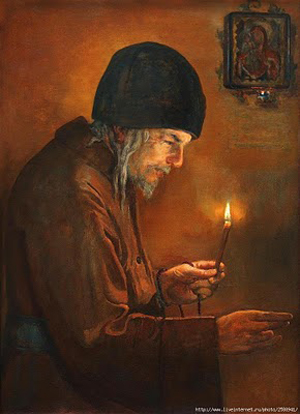
What human condition could be loftier, could be compared with the condition of the man who is admitted to conversation by prayer with the King of kings, with the God of gods, with the Creator and almighty Master of all things visible and invisible, material and spiritual creations?
According to the importance of the exercise of prayer, this exercise needs a considerable preliminary preparation.[2]
Of those wishing to approach the King of kings. He requires a state of mind and mood of heart well-pleasing to Him, that state of mind and that mood of heart by which all the righteous of the Old and New Testaments drew near to Him and pleased Him[3]. Without this state of mind and mood of heart access is impossible; attempts and exertions to access are vain.
You who wish to approach God, and to become His own by constant dwelling in prayer, be cautious. Diligently investigate your state of mind: are you not tainted by some false teaching? Do you follow in exactness and without exception the teaching of the Eastern, the one, true, holy, apostolic Church? [4]. If someone neglect to hear the Church, said the Lord to His disciple, let him be unto thee as an heathen man and a publican, alien to God, enemies of God[5]. What significance can the prayer have for him who is in a state of enmity to God, in a state of alienation from God?
Awareness of one’s sinfulness, awareness of one’s impotence, of one’s nothingness is the necessary condition for prayer to be mercifully accepted and heard by God. All the saints laid as the foundation of prayer the awareness and confession of their sinfulness and the sinfulness of all mankind. The holiness of a man depends on the awareness and confession of this sinfulness. He Who grants holiness to men for their repentance said: I am not come to call the righteous, but sinners to repentance[6].
You who wish to occupy yourself with the labor of prayer! first, before you enter on this labor, strive to forgive everyone who insulted, slandered, disgraced you, everyone who did you any harm whatsoever. He, before Whom you intend to stand in prayer, commands you: If thou bring thy gift of prayer to the heavenly altar of the King of kings, and there rememberest that thy brother hath ought against thee, leave there thy gift before the altar, and go thy way; first be reconciled to thy brother, and then come and offer thy gift.[7]
Prepare yourself for prayer by freedom from infatuations and freedom from cares. From infatuations come cares. Held by infatuations, distracted by cares, your thought cannot rush unswervingly to God by prayer. Ye cannot serve God and mammon: for where your treasure is, there will your heart be also. Therefore take no thought, saying. What shall we eat? or What shall we drink? Or, Wherewithal shall we be clothed? Seek ye by assiduous, constant, prayers filled with compunction the kingdom of God and his righteousness; and all these things shall be added unto you[8]. Tear your mind and your heart away from the earth and all that is earthly, and it will not be uncomfortable for you to commence the unseen procession by prayer to heaven.
If you endure poverty, or grievous circumstances oppress you, or your enemy plots against you and persecutes you: do not pay attention—so that your attention during prayer might not be blown upon by any distraction whatever, by no disturbance whatsoever—do not pay attention to the reminders and thoughts brought to you of your poverty, of your circumstances, of your enemy. He Who has complete power over you, and over your circumstances, and over your enemy, says to His beloved: Let not your hearts be troubled: ye believe in God; believe also in Me.[9]
When thou prayest, commands the Lord, enter into thy closet, and when thou hast shut thy door, pray to thy Father Which is in secret[10]. Whether you are a person in society or if you are alone, strive constantly to deepen yourself in your internal, spiritual closet, to close the doors of feelings and the tongue, to pray in secret with the mind and heart.
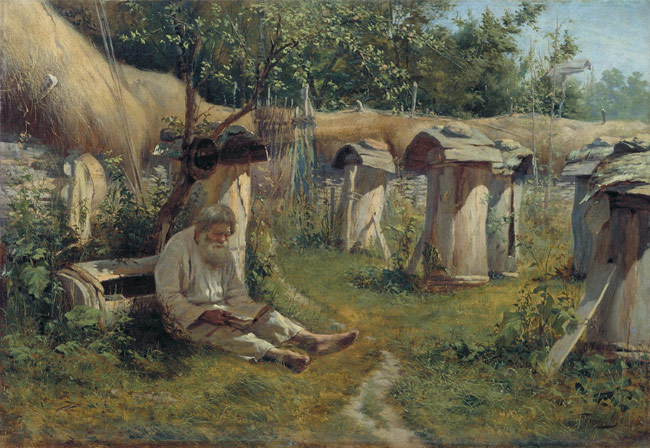
Having come to love the labor of prayer, come to love the solitude also of the material cell. Lock its doors for yourself and for others. Patiently endure the boredom of seclusion; it will not delay in being replaced by a most pleasant feeling. “Dwell in your cell,” said the Holy Fathers, “it will teach you everything”[11], i.e. the monastic life, which is entirely concentrated in prayer.
Having come to love the labor of prayer, come to love silence; it will preserve the soul’s powers unscattered, capable of constant prayer in the inner closet. Being accustomed to silence gives the possibility for silent prayer of the heart even among noisy crowds[12].
As a sacrifice to love for prayer, offer the pleasures of the feelings and intellectual pleasures, love of knowledge, curiosity; guard your soul from all external impressions, so that God might be impressed upon it, through the means of prayer. His all-holy, unknowable, spiritual Image does not endure to dwell in a soul choked up by images of the vain, material world passing by.
Do not admire visible nature; do not occupy yourself with contemplation of its beauties; do not waste precious time and powers of soul on acquiring knowledge provided by human sciences[13]. Make use of both powers and time for acquiring prayer, performing sacred service in your internal closet. There, inside yourself, prayer will open a spectacle which will attract to itself all your attention; it will provide you knowledge which the world cannot contain.
There, in the depth of the heart, you will see the fall of mankind, you will see your soul, killed by sin; you will see the grave; you will see hell; you will see demons; you will see chains and bonds; will see the flaming weapon of the Cherubini guarding the way to the tree of life, prohibiting to man entrance into the dwelling-place of paradise,—you will see many other mysteries hidden from the world and the sons of the world[14]. When this spectacle will be opened,—your gazes will become affixed on it; you will grow cold towards everything temporary and corruptible, with which you were in sympathy until now.
“Now or tomorrow, we shall die,” said St. Andrew to the monk, diverting him from his attachment to the material and explaining the folly of such an attachment[15]. Very true words! a very true depiction of the indefinite length of our earthly life! If not today, tomorrow we shall die. Nothing is easier than dying. The most prolonged life, when we come to its end, turns out to be the briefest instant. Then why occupy ourselves with that which, by necessity, we must abandon, and abandon very soon. Better to study oneself by prayer, to study the life and world awaiting us, in which we will remain forever.
The solitude of the cell and the desert—the dwelling of prayer. “He who has tasted prayer,” said St. John of the Ladder, “will run from gatherings; who, other than prayer, makes its lover as an onager that loves the desert, free from the need of society?”.[16] If you want to initiate your soul into the work of prayer, betake yourself from the sight of the world, repudiate human society, conversations, and the customary reception of friends in your cell, even under the pretext of love. Set aside everything which might interrupt and disturb your mystical conversation with God[17]. Dwell on earth and in human society like a wanderer. You are a wanderer. The earth is a hostelry. Unknown is the hour when you will be summoned. The summons is inevitable and inescapable; to refuse or to resist is impossible. Prepare yourself by holy prayer for the joyous going forth from the hostelry.
Prayer makes man God’s own. Its action is regarded with inexpressible jealousy and hatred by the fallen angels, who by the fall, passed from God’s own to terrible, insane enmity towards Him. By various temptations they strive to make him who is praying waver, to turn him away from his most salutary labor, to wrest away from him that success and blessedness which are undoubtedly attained by labor. Therefore he who wishes to consecrate himself to the exercise of prayer must prepare himself in good time for sorrows, so as not to come into perplexity and confusion, when these sorrows overtake him, so as to resist them courageously with the power of faith and patience[18].
The demons strike the monk who dwells in prayer with bodily ailments, they burden him with poverty, with insufficient attention and help from people, as they struck and burdened Job the much-suffering, by God’s permission. But we, similar to this righteous man, will bless and give thanks to God for that which was permitted by Him, fulfilled by the demons[19]; with doxology and thanksgiving to God let us fulfil God’s all-holy will, which is explained to us by God’s Holy Spirit: in everything give thanks, for this is the will of God in Christ Jesus concerning you[20].
The demons prompt people to take up arms against the man of prayer, to condemn him for strange behavior, for the scantiness of useful activity—to accuse him of idleness, hypocrisy, and bigotry—to attribute evil and wily designs and depraved actions to him—to violate and disturb his silence—to force him to occupations contrary to his way of life, occupations joined with distraction, abstraction, with the violation of peace of the heart. Knowing the original cause of these temptations, let us pray, according to the Gospel commandments and according to the testimony of the Holy Fathers, on behalf of our neighbors, sinning in ignorance and according to inclination; the snares of the devil God will destroy.
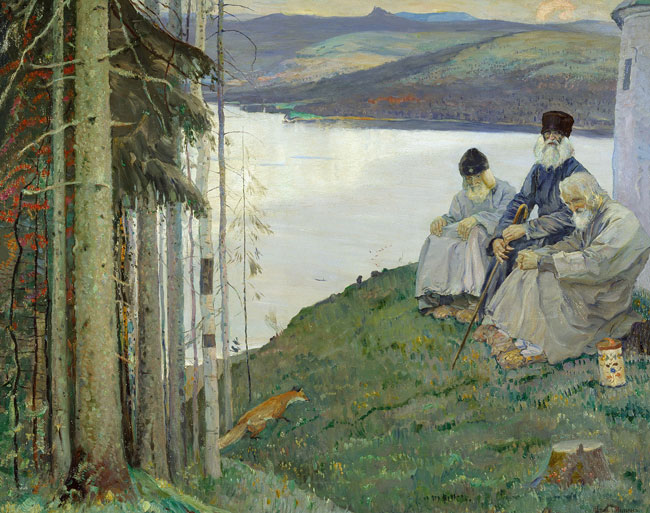
Tempting us from without, the demons do their evil work inside us also. When we withdraw into solitude and begin to occupy ourselves with prayer, they arouse in us various sinful desires, such as we had never felt before—they trouble our heart with numberless sinful thoughts and fantasies, which before this time had never occurred to our mind; they do this with the aim that we, brought into perplexity and despair, thus not seeing any benefit from the labor of prayer and solitude, might abandon them[21]. This action of the demons, for ascetics who are new in their ascetic labors, appears as the soul’s own action; our invisible, wily enemies, perpetrating their villainies, at the same time want to hide, so that escape from the nets spread about a person might be impossible for him, and derangement and pernicion inevitable[22].
Just as the demons recognize that it is very important for them to hide themselves from a person, so also for a person himself it is important to understand that they are the original committers of sin, the source of our temptations, and not our neighbors, not we, when we lead a life of service to God—not by accident. Discovering the enemies, let us gradually learn, under the direction of God’s word, to watch vigilantly over them and over ourselves, and to resist them with firmness. Humble yourselves, the highest Apostle directs us, under the almighty hand of God, that He might exalt you in due time: casting all your care upon Him, for He careth for you. Be sober, be vigilant; because your adversary the devil, as a roaring lion, walketh about, seeking whom he may devour; whom resist stedfast in the faith[23].
This struggle, these attacks of the demons against those who are saving themselves and are praying, are permitted by God Himself—they are the consequences of our voluntary fall, in which we submitted ourselves to the power of the demons. Let us resign ourselves to the just decrees of God concerning us, and let us bow the head beneath all the blows of sorrows and diseases, by which it will be well-pleasing to God to punish our sinfulness and our sins during the temporary life, so as to deliver us from the eternal sorrows and diseases which we deserve. God, permitting us temptations and giving us over to the devil, does not cease to keep providence over us: in punishing, he does not cease to be beneficent. God is faithful, says the Apostle, Who will not suffer you to be tempted above that ye are able; but will with the temptation also make a way to escape, that ye may be able to bear it[24]. And the devil, being a slave and a creation of God, tempts not as much as he himself wants, but as much as the wave of the hand of God lets him; he does not tempt when he wants to; but when leave is granted for it[25]. According to the counsel of the Apostle, let us place on God all our concern for ourselves, all our sorrows, all our hope, and for this let us make our prayer to Him more frequent and let us reinforce it.
Leave for the demons to tempt us is indispensable for our improvement; acting against our prayer, they force us to acquire an especially skilled usage of this sword. By the sword of prayer the fiery sword of the Cherubim guarding the way to the tree of life is shattered, and the conqueror becomes a communicant of eternal life[26]. By the unspeakable wisdom of God, evil, though his intention is not good, helps the good[27]. When, in our solitude and during exercise in prayer suddenly passionate feelings and movements begin to boil up in us, obscene thoughts begin to attack us, sinful fantasies rise before us in seductive vivacity, this is a sign of the arrival of enemies. Then is not the time of despair, not the time of weakening; it is the time of struggle. Let us resist the enemies with strengthened prayer to God, and He will scatter and route the enemies?[28]
In the unseen warfare not always and not quickly do we become conquerors; victory is the gift of God, granted to the ascetic struggler by God in His own time, known to God alone and determined by God alone. The defeats as such can be necessary for us. Here is meant defeats coming from infirmity and our sinfulness, and not from a change of one’s intentions. Defeats are allowed to happen to us for humility, so that we might discern and acquire knowledge of the fallenness of our nature, might acknowledge the necessity of a Redeemer, might believe in Him and confess Him[29].
In such defeats, our unseen enemies suggest shame to us because of the defeat, and because of the shame, a weakening in the labor of prayer, distrust of it, the thought of leaving it and going over to good activity amid human society. Let us not be led into deception! With self-abnegation and shamelessness let us place our wound before our all-good and almighty Physician. Who commanded this salutary shamelessness for us, and Who promised to crown it with revenge on our adversary[30]. Let us put this covenant on our soul: to the end of our life not to abandon the labor of prayer, and from the midst of it to pass on to eternity.
Our shamefacedness in defeats has no meaning; it is an evil mockery at us by our enemies. Is this fig leaf—shame-facedness with its means—able to hide the sin of man from the all-seeing God? God sees sin even without the confession of the sin. He seeks confessions only in order to heal. If He commanded His Apostle to forgive his brother who sinned and repented seven times a day, how much more will He Himself not fulfill this on us, incessantly offering Him prayer and repentance[31].
Let us focus careful attention on the following: Does not our double-mindedness strengthen our enemies in the struggle with us? is it not the reason for our frequent defeats by them? is it not we ourselves who solidify the power and influence of our enemies against us, fulfilling their will by fulfilling our carnal desires, inclinations, and infatuations? do we not anger God by this? do we not drive Him away from ourselves? does there not act in us the love of the world, which leaves for us the appearance of servants of God, taking away the essential dignity of God’s servants, making us in essence enemies of God[32]?
A double minded man is unstable in all his ways of virtues[33]; even more so does he shake on the path of the most exalted, supreme virtue—prayer. He is repudiated by God as neither hot nor cold[34]. Unable to be a disciple of true prayer, which brings its disciples before the face of God for supernatural edification, guiding them in following Christ, will be whosoever he be of you that forsaketh not all that he hath[35]: the unhealthy deviations of fallen man’s will towards the world. And they that are Christ’s have crucified the flesh with the affections and lusts[36]; only those who belong entirely to Christ can acquire true prayer.
A seemingly insignificant infatuation, a seemingly innocent love for some object, live or dead, bring the mind and heart down from heaven, plunge them to earth among the innumberable creeping and crawling things of the sea of life[37]. The Holy Fathers compare the ascetic succeeding in prayer to an eagle, and a trifling infatuation to a noose; if one claw of an eagle’s mighty foot is caught in this noose, then the eagle becomes unable to soar on high, becomes an easy and inevitable prey for the hunter[38]; vain then are both the power and the daring of the regal bird.
Go, the Holy Fathers direct us, borrowing the precept from the holy Gospel, sell the material possessions that thou hast, and give to the poor, and taking up thy cross, deny thyself by counteracting your infatuations and your fallen will[39], that you may be able to pray undisturbed and without distraction[40]. As long as infatuations are alive in you, disturbance and distraction will blow against your prayer.
It is indispensable at first to renounce material possessions, to take leave of the world, to renounce it; only after the realization of this can the Christian see his internal captivity, prison, bonds, wounds, the mortification of the soul[41]. The struggle with death living in the heart, accomplished by means of prayer, under the direction of the Word of God, is crucifixion, is ruin of the soul for the salvation of the soul[42].
Unite prayer with reasonable fasting; the union of these two spiritual weapons was commanded us by the Lord Himself for driving out the demons from ourselves[43]. When thou fastest, anoint thine head and wash thy face[44], the Savior commanded. According to the explanation of the Holy Fathers[45], the oil with which, according to the custom of that time they anointed their head, symbolizes mercy, which must abide in our spiritual tribunal, as the Apostle also said: Put on therefore, as the elect of God, holy and beloved, bowels of mercies, kindness, humbleness of mind, meekness, longsuffering; forbearing one another, and forgiving one another, if any man have a quarrel against any; even as Christ forgave you, so also do ye[46]. The face of the body and soul must be washed by tears; they will appear in the eyes of him who prays and fasts when his heart will be over-filled with mercy to his neighbor, sympathy for all mankind without exception.
Do you want to become God’s own by prayer? Make mercy the property of your heart, by which we are commanded to be like the Heavenly Father[47] and attain perfection by grace[48]. Force your heart to mercy and goodness; submerge, clothe all your spirit in these qualities, as long as you do not feel love for mankind within yourself, similar to Him Who by His sun shines equally on the evil and on the good, and sendeth rain on the just and unjust[49].
When you forgive from the whole soul all your neighbors their sins, then your own personal sins will be opened to you. You will see how much you need the compassion of God, how much all mankind needs it; you will start weeping before God for yourself and for mankind.
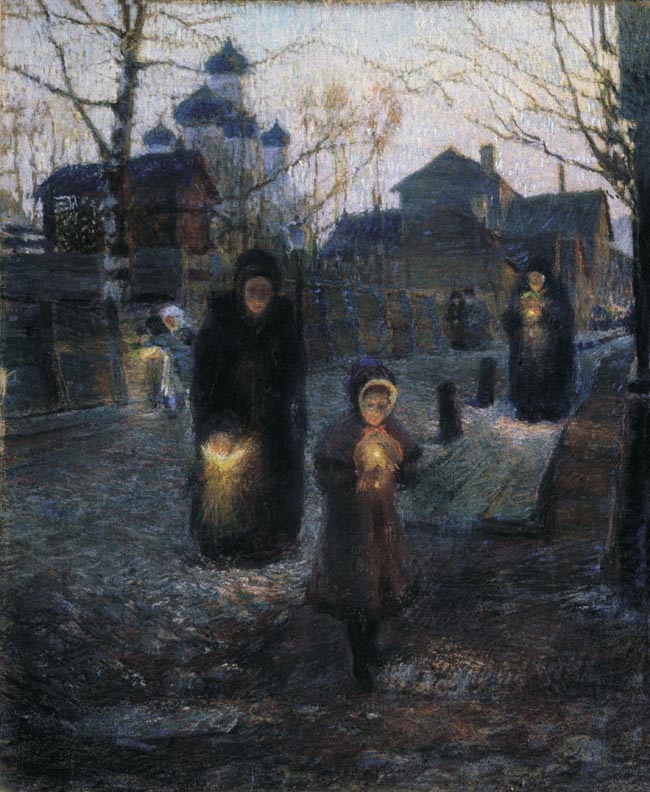
The Holy Fathers unite all the actions of the monk, all his life in weeping. What does the monk’s weeping mean? This is his prayer[50].
The Holy Spirit, when He takes up His dwelling in a person, maketh intercesion for us with groanings which cannot be uttered[51]. The Divine and all-heavenly Spirit, becoming as if the soul of a man, prays and weeps for us; He intercedes for the saints according to the will of God[52], because to Him alone is the will of God known in full. The things of God knoweth no man, but the Spirit of God (I Cor. 2:11). The Lord, promising His disciples His greatest gift, the gift of the Holy Spirit, said: The Comforter, Which is the Holy Spirit, Whom the Father will send in my name. He shall teach you all things[53]; if all things, then also weeping and prayer. He starts weeping for us; He will pray for us; for we know not what we should pray for as we ought[54]. So disabled, limited, darkened, and harmed we are by sin![55]
If the Holy Spirit, dwelling in us, weeps for us, then all the more must we, before the reception of this all-holy Wanderer, weep over ourselves. If our condition, after the renewal of us by the Holy Spirit, is worthy of weeping—worthy of weeping according to the testimony of the Spirit Himself—then all the more is it worthy of weeping in its old state, in its fallenness, when left to itself. Weeping must be an inseparable quality of our prayer, its constant, inseparable companion and assistant, its soul.
He who unites weeping with prayer labors according to the command of God Himself, labors correctly, legally. In his own time he will reap abundant fruit: the joy of sure salvation. He who has set weeping apart from prayer labors in opposition to the command of God; he will reap no fruits. Not only this, he will reap the thistles of self-regard, self-deception, pernicion.
Brethren! Let us not deceive ourselves by a wish ridiculous, irrational, ruinous; let us not strive for the search for enjoyment when in prayer. Grace-filled enjoyment is not the property of sinners; their property is weeping. Let us seek this with all diligence; let us seek this treasure—the key to all spiritual treasures.
He who does not have weeping is in a false position; he is deceived by his pride.
The Holy Fathers call weeping the guide in spiritual labor. It must be at the head of all our pious meditations and lead to their true goal. Meditation not permeated with weeping and led by it is erring meditation[56].
St. Pimen the Great said, “The whole life of a monk should be weeping. This is the way of repentance, taught us by Scripture and the Fathers, who said: weep! there is no other way than weeping”.[57]
Another great Father said, “If you wish to please God, leave the world, separate yourself from earth, abandon creation, approach the Creator, unite with God by prayer and weeping[58].
Monks living in populous monasteries and desiring to attain prayerful weeping, must direct particular attention to the mortification of their will. If they will cut it off and not direct attention to the sins, in general to the conduct, of their neighbors, then they will find both prayer and weeping. Thoughts, gathering in the heart, arouse prayer in it and sorrow, longing for God; and this sorrow brings forth tears[59].
With the frightful dearth of directors of true prayer in our times, let us choose weeping for ourselves as a guide and director. He will both teach us prayer and keep us from self-deception. All who denied weeping, having separated it from their prayer, fell into self-deception. The Holy Fathers affirm this[60].
He who has attained pure prayer by the means of weeping remembers only God and his sinfulness during prayer. Death and judgment, which must come immediately after death, seem to him to be setting in. He stands, by the feelings of his heart, before the impartial and implacable Judge on the final day of judgment, before the Judge Who can still be placated and can receive the person who weeps at the judgment which is determined and fore-started by prayer. At the right time is he horrified, is perplexed, trembles, laments, moans, so as to escape useless horror, trembling, perplexity, lamentation, and despair which the final sentence of God, angered for eternity, will foster in the rejected sinners. He condemns himself, that he might not be condemned; he recognizes himself as a criminal worthy of all punishments, so as to divert punishments from himself; he confesses himself a sinner, so as to receive righteousness from the right hand of God, Who gives this righteousness gratis to all sinners who admit and repent in their sinfulness.
The Lord commands: Ask, and it shall be given you; seek, and ye shall find; knock, and it shall be opened. Here is indicated not a single action, but constant; the command spreads to the whole earthly life man. For every one that asketh in this way receiveih; and he that seeketh findeth: and to him that knocketh relentlessly it shall be opened. Your heavenly Father shall give the Holy Spirit to them that ask Him[61]. By the promise itself, the most diligent, uninterrupted activity is indispensible: for ye know not when the master of the house cometh, at even, or at midnight, or at the cockcrowing, or in the morning; lest coming suddenly He find you sleeping[62].
It is impossible, St. John of the Ladder notes, to teach prayer to him who does not wish to learn it, by words alone[63]. Its teachers are experience and weeping. In contrition and humility of spirit let us begin the labor of prayer, let us enter under the guidance of weeping; God Himself, Who grants the prayer of him who asks, becomes our teacher of prayer.
Come unto me, the sacred mother of all virtues, prayer, invites us, all ye that labor under the yoke of passions, in captivity to the fallen spirits, and heavy laden with various sins, and I will give you rest. Take my yoke upon you, and ye shall find rest unto your souls, healing for your wounds. For my yoke is easy[64], able to heal from sins, even the very greatest ones[65].
Come, ye children, the sacred mother of all virtues—prayer—invites us, hearken unto me; I will teach you the fear of the Lord by experience itself; I will bring the sense of it into your hearts. I will teach you also the fear of the beginners, by which each departs from evil and the pure fear of the Lord, enduring forever[66], the fear, by which the Lord is fearsome for all them that are about Him[67], fearsome for the very flaming Cherubim and most glorious, six-winged Seraphim. Abandon fruitless and vain attachment to all that is passing, with which you must also involuntarily part! abandon merriment and seductive delights! abandon empty talking, joking, and verbosity, which empty the soul! remember, explore, become sure, that you are wanderers, here on the earth, for a short time, that your fatherland, eternal home, is heaven. Thence you need a faithful and powerful guide; this guide am I, no one else. All the saints, ascending from the earth to heaven, made this journey no other way than by me. I open for him who enters into union with me the fallenness of man, and I draw him out of them as from a deep abyss. I uncover before him the princes of the air, their nets and chains; I break these nets and chains; I beat and chase these princes. I explain the Creator to the created and the Redeemer to the redeemed; I reconcile man with God. I open before my student and beloved the immeasurable greatness of God, and bring him to the state of reverence and submission to Him, in which creations should be before the Creator. I sow humility in the heart; I make the heart the source of abundant tears; I make my communicants the communicants of Divine grace. I do not leave those guided by me, until I have brought them before the face of God, until I have united them with God. God is the unfulfillable fulfillment of all desires in this and the coming age. Amen.
[1] Word 3, Ch. 1
[3] But the angel said unto him, Fear not, Zacharias: for thy prayer is heard; and thy wife Elisabeth shall bear thee a son, and thou shalt call his name John. And thou shalt have joy and gladness; and many shall rejoice at his birth. For he shall be great in the sight of the Lord, and shall drink neither wine nor strong drink; and he shall be filled with the Holy Ghost, even from his mother’s womb. And many of the children of Israel shall he turn to the Lord their God. And he shall go before him in the spirit and power of Elias, to turn the hearts of the fathers to the children, and the disobedient to the wisdom of the just; to make ready a people prepared for the Lord. Luke 1 13–17
[4] Book of Needs, Order of Confession
[5] Moreover if thy brother shall trespass against thee, go and tell him his fault between thee and him alone: if he shall hear thee, thou hast gained thy brother. But if he will not hear thee, then take with thee one or two more, that in the mouth of two or three witnesses every word may be established. And if he shall neglect to hear them, tell it unto the church: but if he neglect to hear the church, let him be unto thee as an heathen man and a publican. Verily I say unto you, Whatsoever ye shall bind on earth shall be bound in heaven: and whatsoever ye shall loose on earth shall be loosed in heaven. Matthew 18 15–18
[6] But when Jesus heard that, he said unto them, They that be whole need not a physician, but they that are sick. But go ye and learn what that meaneth, I will have mercy, and not sacrifice: for I am not come to call the righteous, but sinners to repentance. Matthew 9 12–13
[7] But I say unto you, That whosoever is angry with his brother without a cause shall be in danger of the judgment: and whosoever shall say to his brother, Raca, shall be in danger of the council: but whosoever shall say, Thou fool, shall be in danger of hell fire. Therefore if thou bring thy gift to the altar, and there rememberest that thy brother hath ought against thee; Leave there thy gift before the altar, and go thy way; first be reconciled to thy brother, and then come and offer thy gift. Matthew 5 22–24
[8] But lay up for yourselves treasures in heaven, where neither moth nor rust doth corrupt, and where thieves do not break through nor steal: For where your treasure is, there will your heart be also. The light of the body is the eye: if therefore thine eye be single, thy whole body shall be full of light. But if thine eye be evil, thy whole body shall be full of darkness. If therefore the light that is in thee be darkness, how great is that darkness! No man can serve two masters: for either he will hate the one, and love the other; or else he will hold to the one, and despise the other. Ye cannot serve God and mammon. Therefore I say unto you, Take no thought for your life, what ye shall eat, or what ye shall drink; nor yet for your body, what ye shall put on. Is not the life more than meat, and the body than raiment? Behold the fowls of the air: for they sow not, neither do they reap, nor gather into barns; yet your heavenly Father feedeth them. Are ye not much better than they? Which of you by taking thought can add one cubit unto his stature? And why take ye thought for raiment? Consider the lilies of the field, how they grow; they toil not, neither do they spin: And yet I say unto you, That even Solomon in all his glory was not arrayed like one of these. Wherefore, if God so clothe the grass of the field, which to day is, and to morrow is cast into the oven, shall he not much more clothe you, O ye of little faith? Therefore take no thought, saying, What shall we eat? or, What shall we drink? or, Wherewithal shall we be clothed? (For after all these things do the Gentiles seek:) for your heavenly Father knoweth that ye have need of all these things. But seek ye first the kingdom of God, and his righteousness; and all these things shall be added unto you. Take therefore no thought for the morrow: for the morrow shall take thought for the things of itself. Sufficient unto the day is the evil thereof. Matthew 6 20–34
[9] Let not your heart be troubled: ye believe in God, believe also in me. In my Father’s house are many mansions: if it were not so, I would have told you. I go to prepare a place for you. And if I go and prepare a place for you, I will come again, and receive you unto myself; that where I am, there ye may be also. And whither I go ye know, and the way ye know. John 14 1–4
[10] And when thou prayest, thou shalt not be as the hypocrites are: for they love to pray standing in the synagogues and in the corners of the streets, that they may be seen of men. Verily I say unto you, They have their reward. But thou, when thou prayest, enter into thy closet, and when thou hast shut thy door, pray to thy Father which is in secret; and thy Father which seeth in secret shall reward thee openly. But when ye pray, use not vain repetitions, as the heathen do: for they think that they shall be heard for their much speaking. Matthew 6 5–7
[11] Alphabetical Patericon, St. Arsenius the Great
[12] St. Isaac the Syrian, Word 41
[13] St. John Carpathian, Ch. 13. Philokalia, Part 3
[14] St. Macarius the Great, Word 1, Ch. 1; Word 7, Ch. 1
[15] Lives of the Saints, Oct. 2
[16] The Ladder, Step 27:56
[17] Cf. Word 56 of St. Isaac the Syrian
[18] St. Nilus of Sinai, On Prayer, Philokalia, Pt. IV
[19] Job 1–2
[20] Now we exhort you, brethren, warn them that are unruly, comfort the feebleminded, support the weak, be patient toward all men. See that none render evil for evil unto any man; but ever follow that which is good, both among yourselves, and to all men. Rejoice evermore. Pray without ceasing. In every thing give thanks: for this is the will of God in Christ Jesus concerning you. Quench not the Spirit. Despise not prophesyings. Prove all things; hold fast that which is good. Abstain from all appearance of evil. And the very God of peace sanctify you wholly; and I pray God your whole spirit and soul and body be preserved blameless unto the coming of our Lord Jesus Christ. 1 Thessalonians 5 14–23
[21] St. Nilus Sorsky, Word 3
[22] St. Macarius the Great, Word 7, Ch. 31
[23] Likewise, ye younger, submit yourselves unto the elder. Yea, all of you be subject one to another, and be clothed with humility: for God resisteth the proud, and giveth grace to the humble. Humble yourselves therefore under the mighty hand of God, that he may exalt you in due time: Casting all your care upon him; for he careth for you. Be sober, be vigilant; because your adversary the devil, as a roaring lion, walketh about, seeking whom he may devour: Whom resist stedfast in the faith, knowing that the same afflictions are accomplished in your brethren that are in the world. But the God of all grace, who hath called us unto his eternal glory by Christ Jesus, after that ye have suffered a while, make you perfect, stablish, strengthen, settle you. To him be glory and dominion for ever and ever. Amen. 1 Peter 5 5–11
[24] Neither let us tempt Christ, as some of them also tempted, and were destroyed of serpents. Neither murmur ye, as some of them also murmured, and were destroyed of the destroyer. Now all these things happened unto them for ensamples: and they are written for our admonition, upon whom the ends of the world are come. Wherefore let him that thinketh he standeth take heed lest he fall. There hath no temptation taken you but such as is common to man: but God is faithful, who will not suffer you to be tempted above that ye are able; but will with the temptation also make a way to escape, that ye may be able to bear it. 1 Corinthians 10 9–13
[25] St. Macarius the Great, Word 4, Ch. 7
[26] He that hath an ear, let him hear what the Spirit saith unto the churches; To him that overcometh will I give to eat of the tree of life, which is in the midst of the paradise of God. Revelation 2 7; St. Macarius the Great, Word 4:5
[27] St. Macarius the Great, Word 4:6
[28] An example of struggle with passions which arose can be seen in the life of St. Justina, Oct. 2.
[29] St. Nilus Sorsky, Word 3
[31] Then said he unto the disciples, It is impossible but that offences will come: but woe unto him, through whom they come! It were better for him that a millstone were hanged about his neck, and he cast into the sea, than that he should offend one of these little ones. Take heed to yourselves: If thy brother trespass against thee, rebuke him; and if he repent, forgive him. And if he trespass against thee seven times in a day, and seven times in a day turn again to thee, saying, I repent; thou shalt forgive him. And the apostles said unto the Lord, Increase our faith. Luke 17 1–5
[32] From whence come wars and fightings among you? come they not hence, even of your lusts that war in your members? Ye lust, and have not: ye kill, and desire to have, and cannot obtain: ye fight and war, yet ye have not, because ye ask not. Ye ask, and receive not, because ye ask amiss, that ye may consume it upon your lusts. Ye adulterers and adulteresses, know ye not that the friendship of the world is enmity with God? whosoever therefore will be a friend of the world is the enemy of God. Do ye think that the scripture saith in vain, The spirit that dwelleth in us lusteth to envy? But he giveth more grace. Wherefore he saith, God resisteth the proud, but giveth grace unto the humble. Submit yourselves therefore to God. Resist the devil, and he will flee from you. James 4 1–7
[33] If any of you lack wisdom, let him ask of God, that giveth to all men liberally, and upbraideth not; and it shall be given him. But let him ask in faith, nothing wavering. For he that wavereth is like a wave of the sea driven with the wind and tossed. For let not that man think that he shall receive any thing of the Lord. A double minded man is unstable in all his ways. Let the brother of low degree rejoice in that he is exalted: But the rich, in that he is made low: because as the flower of the grass he shall pass away. James 1 5–10
[34] And unto the angel of the church of the Laodiceans write; These things saith the Amen, the faithful and true witness, the beginning of the creation of God; I know thy works, that thou art neither cold nor hot: I would thou wert cold or hot. So then because thou art lukewarm, and neither cold nor hot, I will spue thee out of my mouth. Because thou sayest, I am rich, and increased with goods, and have need of nothing; and knowest not that thou art wretched, and miserable, and poor, and blind, and naked: I counsel thee to buy of me gold tried in the fire, that thou mayest be rich; and white raiment, that thou mayest be clothed, and that the shame of thy nakedness do not appear; and anoint thine eyes with eyesalve, that thou mayest see. As many as I love, I rebuke and chasten: be zealous therefore, and repent. Revelation 3 14–19
[35] Or what king, going to make war against another king, sitteth not down first, and consulteth whether he be able with ten thousand to meet him that cometh against him with twenty thousand? Or else, while the other is yet a great way off, he sendeth an ambassage, and desireth conditions of peace. So likewise, whosoever he be of you that forsaketh not all that he hath, he cannot be my disciple. Salt is good: but if the salt have lost his savour, wherewith shall it be seasoned? It is neither fit for the land, nor yet for the dunghill; but men cast it out. He that hath ears to hear, let him hear. Luke 14 31–35
[36] But the fruit of the Spirit is love, joy, peace, longsuffering, gentleness, goodness, faith, Meekness, temperance: against such there is no law. And they that are Christ’s have crucified the flesh with the affections and lusts. If we live in the Spirit, let us also walk in the Spirit. Let us not be desirous of vain glory, provoking one another, envying one another. Galatians 5 22–26
[37] O LORD, how manifold are thy works! in wisdom hast thou made them all: the earth is full of thy riches. So is this great and wide sea, wherein are things creeping innumerable, both small and great beasts. There go the ships: there is that leviathan, whom thou hast made to play therein. Psalm 104 24–26
[38] St. Abba Dorotheus, Instruction III, “That one must quickly cut off passions”
[39] Matt. 19 21; 16 24; Mark 10 21
[40] St. Nilus of Sinai, “On Prayer,” Ch. 17
[41] St. Macarius of Egypt, Homily 21; 2.3
[42] Mark 8 25. Experiences of such a struggle and crucifixion we see in the biography of St. Antony the Great. St. Macarius of Egypt, and other holy monks.
[43] When Jesus saw that the people came running together, he rebuked the foul spirit, saying unto him, Thou dumb and deaf spirit, I charge thee, come out of him, and enter no more into him. And the spirit cried, and rent him sore, and came out of him: and he was as one dead; insomuch that many said, He is dead. But Jesus took him by the hand, and lifted him up; and he arose. And when he was come into the house, his disciples asked him privately, Why could not we cast him out? And he said unto them, This kind can come forth by nothing, but by prayer and fasting. Mark 9 25–29
[44] Moreover when ye fast, be not, as the hypocrites, of a sad countenance: for they disfigure their faces, that they may appear unto men to fast. Verily I say unto you, They have their reward. But thou, when thou fastest, anoint thine head, and wash thy face; That thou appear not unto men to fast, but unto thy Father which is in secret: and thy Father, which seeth in secret, shall reward thee openly. Matthew 6 16–18
[45] Bl. Theophylact
[46] Lie not one to another, seeing that ye have put off the old man with his deeds; And have put on the new man, which is renewed in knowledge after the image of him that created him: Where there is neither Greek nor Jew, circumcision nor uncircumcision, Barbarian, Scythian, bond nor free: but Christ is all, and in all. Put on therefore, as the elect of God, holy and beloved, bowels of mercies, kindness, humbleness of mind, meekness, longsuffering; Forbearing one another, and forgiving one another, if any man have a quarrel against any: even as Christ forgave you, so also do ye. And above all these things put on charity, which is the bond of perfectness. And let the peace of God rule in your hearts, to the which also ye are called in one body; and be ye thankful. Colossians 3 9–15
[47] Luke 6:7
[48] But I say unto you, Love your enemies, bless them that curse you, do good to them that hate you, and pray for them which despitefully use you, and persecute you; That ye may be the children of your Father which is in heaven: for he maketh his sun to rise on the evil and on the good, and sendeth rain on the just and on the unjust. For if ye love them which love you, what reward have ye? do not even the publicans the same? And if ye salute your brethren only, what do ye more than others? do not even the publicans so? Be ye therefore perfect, even as your Father which is in heaven is perfect. Matthew 5 44–48
[49] Matt. 5:45. St. Isaac the Syrian, Word 1
[50] St. Isaac, Word 21
[51] For we are saved by hope: but hope that is seen is not hope: for what a man seeth, why doth he yet hope for? But if we hope for that we see not, then do we with patience wait for it. Likewise the Spirit also helpeth our infirmities: for we know not what we should pray for as we ought: but the Spirit itself maketh intercession for us with groanings which cannot be uttered. And he that searcheth the hearts knoweth what is the mind of the Spirit, because he maketh intercession for the saints according to the will of God. And we know that all things work together for good to them that love God, to them who are the called according to his purpose. Romans 8 24–28
[52] Rom. 8 h 27
[53] Jesus answered and said unto him, If a man love me, he will keep my words: and my Father will love him, and we will come unto him, and make our abode with him. He that loveth me not keepeth not my sayings: and the word which ye hear is not mine, but the Father’s which sent me. These things have I spoken unto you, being yet present with you. But the Comforter, which is the Holy Ghost, whom the Father will send in my name, he shall teach you all things, and bring all things to your remembrance, whatsoever I have said unto you. Peace I leave with you, my peace I give unto you: not as the world giveth, give I unto you. Let not your heart be troubled, neither let it be afraid. John 14 23–27
[54] Rom. 8 26
[55] St. Macarius the Great, Word 6:11; Word 7:12
[56] St. Symeon the New Theologian, Word 6
[57] Alphabetical Patericon
[58] Alphabetical Patericon. Sisois the Great
[59] The Guide to spiritual life of Sts. Barsonuphius the Great and John the Prophet, Answer 282.
[60] St. Gregory of Sinai on deception, likewise and on many reasons, Philokalia; Pt. 1.
[61] Luke 11:9,10,18. Blagovestnik of Bl. Theophylact
[62] Heaven and earth shall pass away: but my words shall not pass away. But of that day and that hour knoweth no man, no, not the angels which are in heaven, neither the Son, but the Father. Take ye heed, watch and pray: for ye know not when the time is. For the Son of man is as a man taking a far journey, who left his house, and gave authority to his servants, and to every man his work, and commanded the porter to watch. Watch ye therefore: for ye know not when the master of the house cometh, at even, or at midnight, or at the cockcrowing, or in the morning: Lest coming suddenly he find you sleeping. And what I say unto you I say unto all, Watch. Mark 13 31–37
[63] Step 28:64
[64] At that time Jesus answered and said, I thank thee, O Father, Lord of heaven and earth, because thou hast hid these things from the wise and prudent, and hast revealed them unto babes. Even so, Father: for so it seemed good in thy sight. All things are delivered unto me of my Father: and no man knoweth the Son, but the Father; neither knoweth any man the Father, save the Son, and he to whomsoever the Son will reveal him. Come unto me, all ye that labour and are heavy laden, and I will give you rest. Take my yoke upon you, and learn of me; for I am meek and lowly in heart: and ye shall find rest unto your souls. For my yoke is easy, and my burden is light. Matthew 11 25–30
[65] The Ladder, Step 28:11
[66] The law of the LORD is perfect, converting the soul: the testimony of the LORD is sure, making wise the simple. The statutes of the LORD are right, rejoicing the heart: the commandment of the LORD is pure, enlightening the eyes. The fear of the LORD is clean, enduring for ever: the judgments of the LORD are true and righteous altogether. Psalm 19 7–9
[67] And the heavens shall praise thy wonders, O LORD: thy faithfulness also in the congregation of the saints. For who in the heaven can be compared unto the LORD? who among the sons of the mighty can be likened unto the LORD? God is greatly to be feared in the assembly of the saints, and to be had in reverence of all them that are about him. O LORD God of hosts, who is a strong LORD like unto thee? or to thy faithfulness round about thee? Psalm 89 5–8
Orthodox Life, No. 5, September-October 1968, pp. 18-30

Pas de commentaire